Quick Answer: It will depend on your users, market, type of app, budget, and monetisation model that you have to choose between Android vs. iOS first in 2026. Android has a wider international coverage, whereas iOS may be appropriate for products that focus on Apple-dominated markets. The appropriate MVP platform is that which allows you to test the validity of your core product on the users who are the most likely to use it. Last Updated: September 2026
Introduction
The construction of an application in 2026 does not necessarily imply releasing Android and iOS simultaneously. In the case of startups and companies with a constrained MVP budget, the simultaneous construction of both platforms may raise the requirements for the development, testing, maintenance, and release of the product prior to validation. A full-service digital agency can help startups weigh these trade-offs before development begins.
First, it is not Android vs. iOS. That is the platform that will provide your business with the most valuable chance to experiment with its product in the right group. The global number can assist; however, the country, audience, product type, and user behaviour may give quite different results. Accordingly, you should not assume a general market share and start by choosing platforms based on your target users.
Key Takeaways
- Android serves a bigger world share in mobile operating systems, although that does not necessarily make it the correct initial platform to support all apps.
- iOS can work when your target market is clustered in Apple-intensive markets.
- Android vs iOS development cost relies on features, testing, integrations, and development strategy.
- You want to begin with your most valuable users, instead of attempting to cover all the platforms at once.
- TechDigital Labs employs real-life app development experience, such as VPN applications, in deciding on platforms.
What Should You Consider Before Choosing a Platform?
A first app platform implies aligning your product with the users, market, and business model that you are attempting to validate. The type of platform chosen can affect the technical stack, tests, design choices, and release process and subsequent expansion, and therefore must be thought over prior to any development commencing.
Start with your target market. If your customers predominantly use Android, then having an iOS MVP initially may postpone the ability to reach the most important audience. Likewise, when your customers happen to be clustering in markets where the usage of iPhones is special, iOS could be a more suitable initial testing ground.
Consider these factors before making the decision:
- Target country and user demographics
- Expected device usage
- App monetisation model
- MVP budget
- Required device features
- Development timeline
- Testing requirements
- Future cross-platform plans
The app itself is important as well. The requirements of a simple utility application may be vastly different than a VPN, financial application, medical application, marketplace, game application, or a product connected to hardware.
When Does Android First Make Sense?
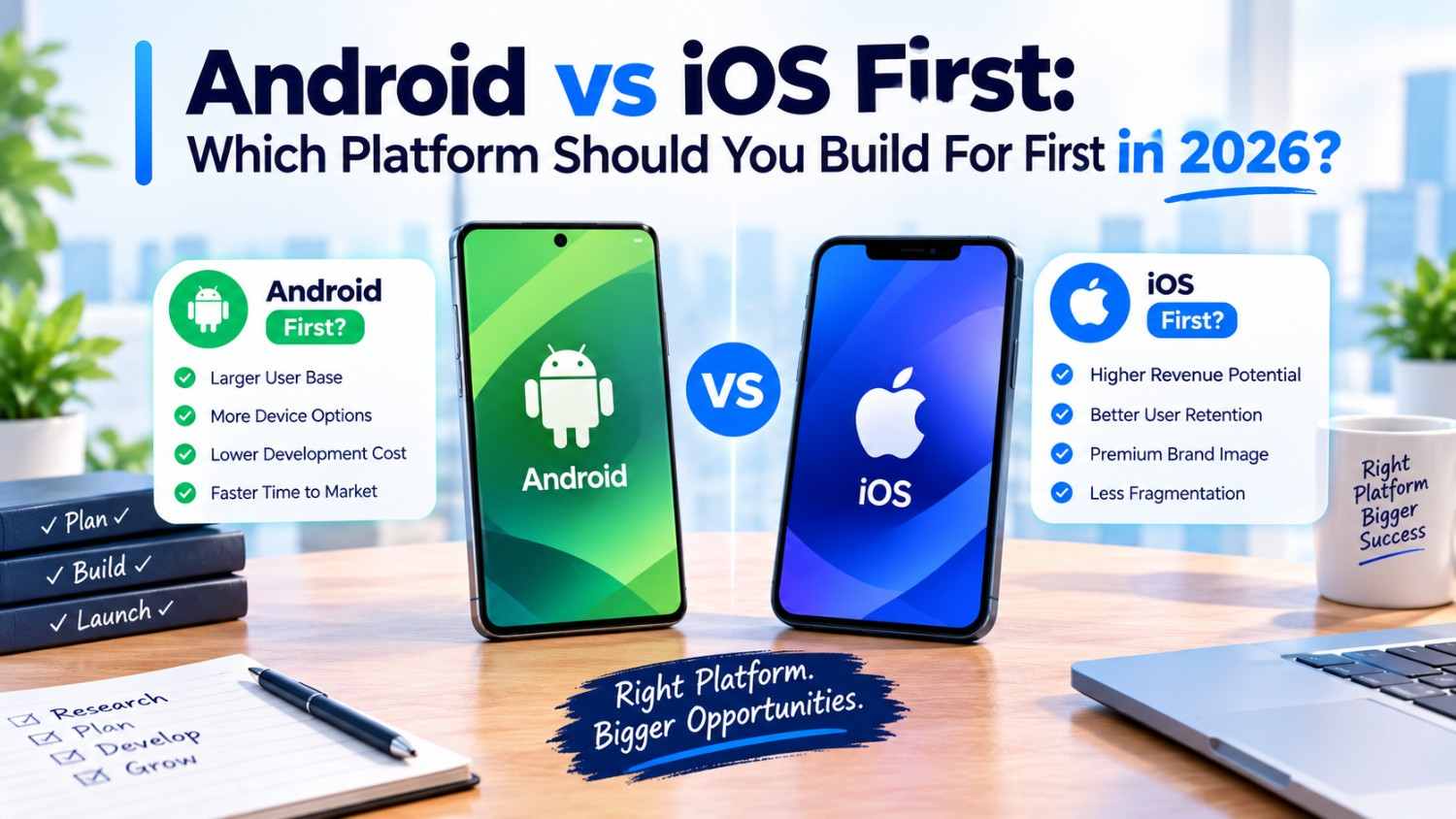
Android-first development refers to the introduction of Android first and subsequently investing in the iOS version. It may be effective when your target market is widely distributed across a wide range of devices and markets, especially when Android is a majority of your target market.
Android has significant global presence and serves as a significant launching point for many products. Nonetheless, developers should also take into account its wider device ecosystem. Testing may be complicated by different manufacturers, screen sizes, hardware capabilities, and Android versions.
Android is first applicable when you target Android users, a wide reach of our device is a consideration, your market doesn’t skip Android, or your product requires Android-specific features. It is not Android only. A focused MVP has the potential to establish the product and user feedback loop prior to the expansion of the team to iOS.
When Does iOS First Make Sense?
Developing iOS-first may be suitable in situations where the target market is highly focused on Apple products or where the product is Apple-focused. The state of control of hardware and software in Apple is also able to ease certain parts of testing of devices when compared to the broader Android ecosystem.
iOS is first applicable when you have customers that are concentrated in Apple-heavy markets, a product that requires Apple technologies, or even your launch strategy is based on a known user base of Apple. Nonetheless, companies must not select iOS based on the presumed value of the users. The decision should be motivated by audience data and product needs.
Android vs iOS Development Cost
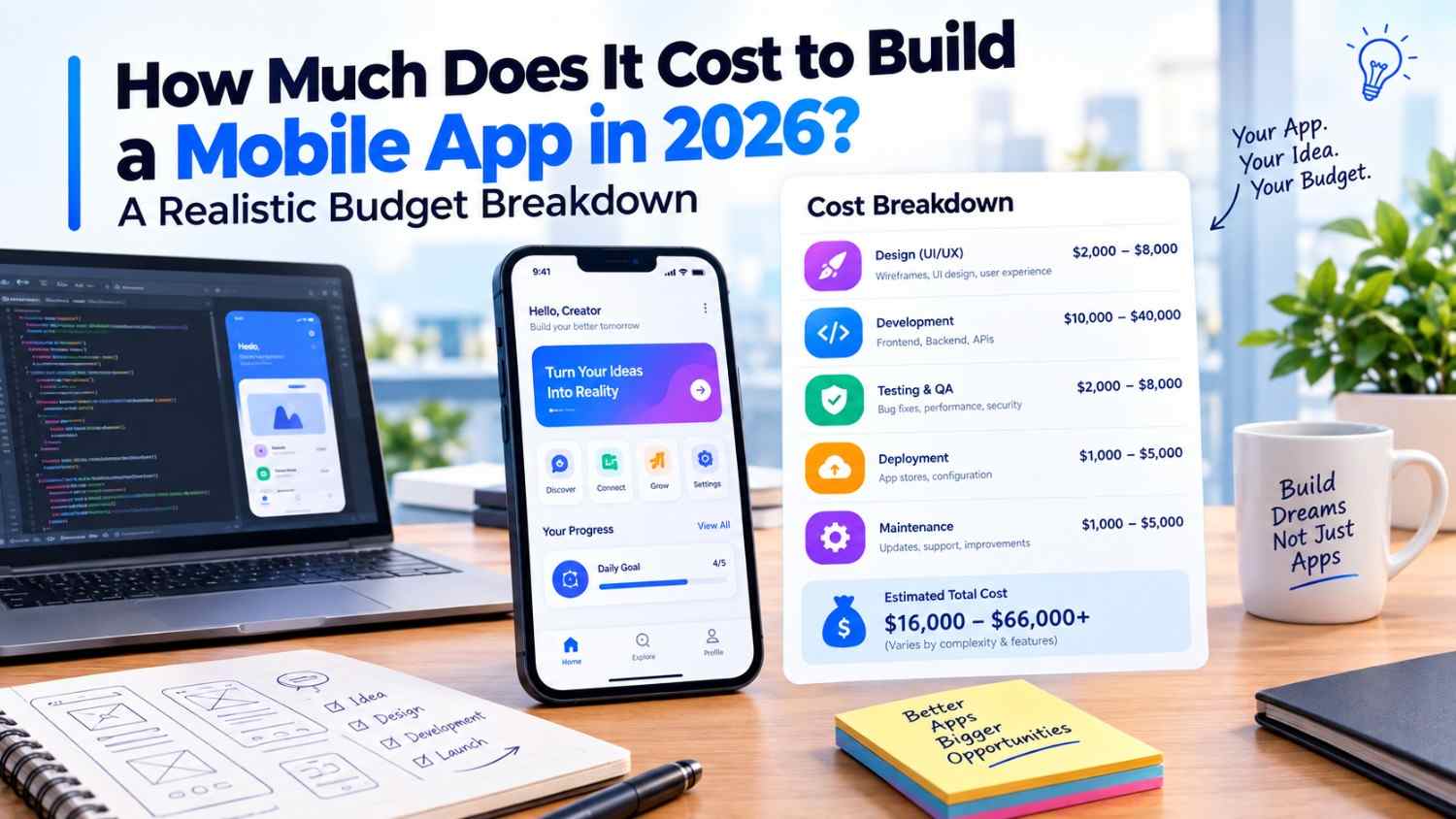
Android vs iOS development cost varies depending on the scale and complexity of the application and not on the platform name. Additional functionality, including authentication, payments, APIs, real-time, security, analytics, location services, third-party integrations, etc., might be more cost-impactful than the choice of the initial platform.
Constructing the two platforms individually may add to design, development, testing, deployment, and maintenance efforts. Android might have to be tested on a wider range of devices, whereas the development of iOS has its own Apple-specific tools and platform-related requirements. In the case of an MVP, it can be more important to minimize unnecessary features than to adopt a platform simply because that platform is believed to be cheaper to develop. Planning your launch spend early, including how to allocate your digital marketing budget, keeps the MVP focused.
The main factors affecting cost include:
- UI/UX complexity
- Number of screens and user flows
- Backend and API development
- Payment and authentication systems
- Third-party integrations
- Security requirements
- Device and OS testing
- Post-launch maintenance
How Should You Choose a Platform for Your MVP?
Given the minimum viable product and the user base that can yield the most valuable feedback, MVP app platform choice must be guided by the latter. Rather than asking which platform to launch app first, find out what sources your first meaningful users are most likely to come from.
TechDigital Labs uses this viable strategy in projects of mobile apps, such as VPN applications which are designed for Android. A good example would be VPN products, as all the time performance, connection, permissions, behaviour of the device, security, and user expectations can affect platform choices. This experience supports the need to consider the effective product requirements prior to deciding on the initial platform.
The first thing to do is to find your first users, research other competing platforms, determine the core feature, approximate development and testing costs, and how the second platform can be brought in later. This allows companies to test demand without necessarily bearing the entire cost of two different launches. Startups can pair this validation approach with a broader digital growth roadmap once the MVP proves demand.
Should You Eventually Build for Both?
As soon as the product has been proven to be successful in the market and other users warrant the costs of developing and maintaining the product, it may be important to support both platforms. This choice must rely on the real user demand, revenue prospects, customer expectations, and the cost of maintaining a second platform. A digital marketing and technology partner can help you model demand, revenue, and acquisition costs before you commit to a second platform.
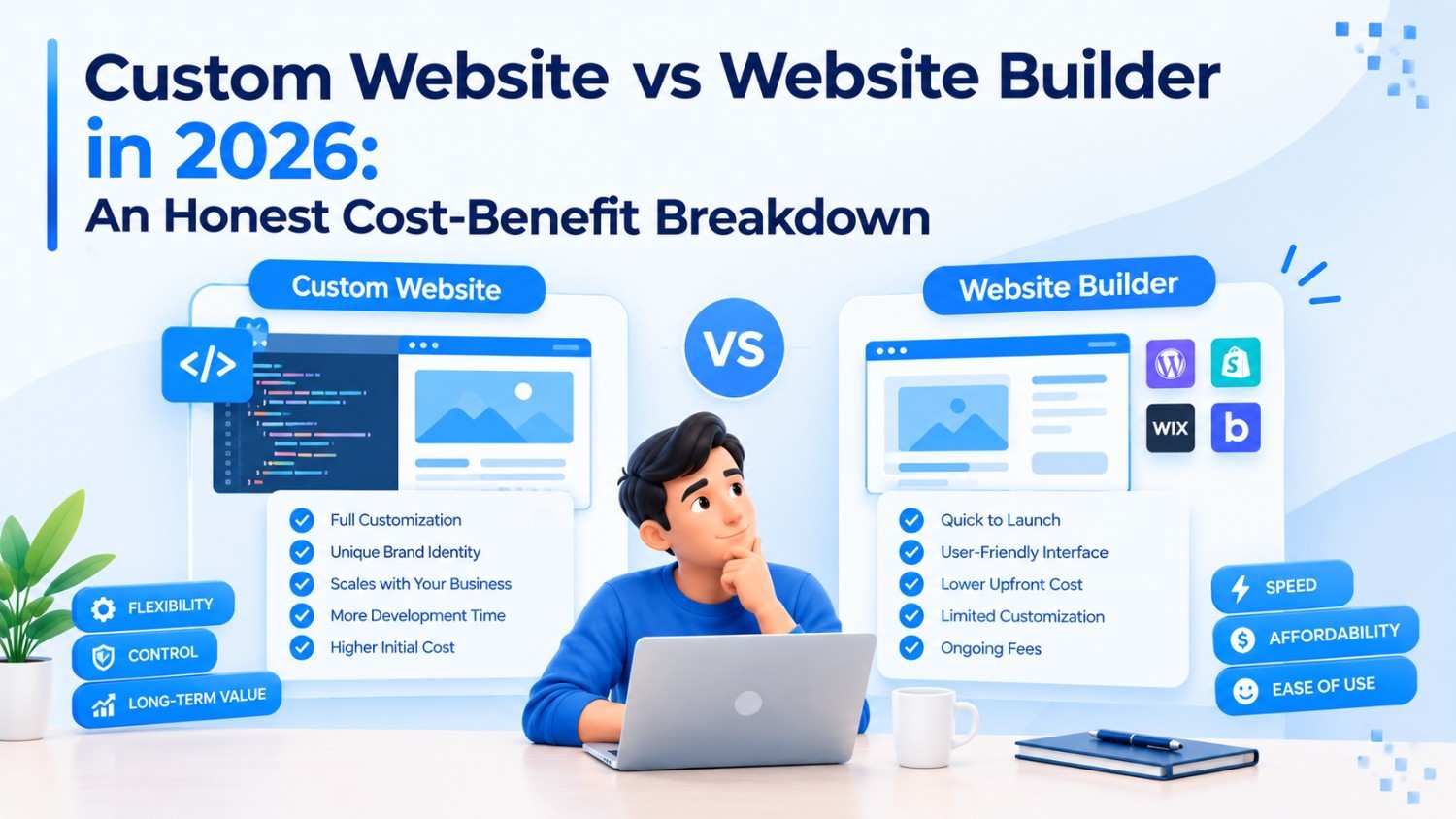
The calculation can also be altered with cross-platform development. Shared-code technologies can lead to less duplication of development work depending on the product. An application that needs intensive platform-specific features, specialised performance, or wide-ranging native API access may nevertheless be suited to native development. The same build-versus-buy thinking applies to web projects, such as choosing between a custom website and a website builder.
Final Thoughts
Android vs iOS first in 2026 is not just a technical choice. It is a product, market, budget, and user-acquisition decision that may influence your speed of validating an MVP and the amount of money you spend prior to getting significant feedback.
Select Android where all or most of your initial audience is on Android or wide device coverage is important. iOS is the first choice when your market of initial launch is highly Apple-centric, or your product needs Apple technologies. Unless your resources can support it, and your audience is already split across both platforms, then it might be suitable to open on both platforms.
TechDigital Labs, a digital growth agency, bridges the gap between platform decisions and product needs, user behaviour, technical complexity, and long-term scalability. The idea here is to create the simplest useful product, test it with actual users, get insight into the responses, and scale up where the data is in favor of the next step.
Author Expertise
Authored by the TechDigital Labs Editorial Team, experts in the area of mobile app development, user interface/user experience design, software development, technical execution, and digital product strategy. The team focuses on mobile product and platform selection, cost of development, performance, usability, and long-term scalability to achieve results.