Quick Answer: The cost to build a mobile app in 2026 can range from around $5,000 for a lean MVP to $100,000+ for a complex enterprise product. Depending on the complexity of the app, the platform used, and the UI/UX, as well as the complexity of the backend development, integrations, security measures, testing, and maintenance, a practical budget is determined. In the case of a focused MVP, a budget of around 10,000-30,000 will be a realistic starting point and a budget that the majority of businesses can afford, whilst some larger products might cost much more. Last Updated: September 2026
Key Takeaways
- Depending on features and scope of development, a lean MVP can cost about 50,000-15,000 dollars.
- A mid-complexity business application may cost between 15000-50,000.
- Complex or enterprise applications may be up to $50,000-150,000+.
- By creating cross-platform development, duplicated work can be minimized when a single product requires Android as well as iOS.
- The final budget can be significantly influenced by the backend systems and integrations, security, testing, and post-launch support.
What Does It Cost to Build a Mobile App in 2026?
The prices of mobile app development in 2026 depend primarily on the scope and technical complexity of a product. The difference between a single-screen app that can do some basic functions and a marketplace fintech, healthcare application, or real-time delivery product is vast. In its published 2026 pricing guides, there is a wide variability, as the development teams may incorporate varying degrees of design, backend work, testing, infrastructure, and support in their quotation.
To start with in the area of practical budgeting, it will be useful to begin with three levels of projects: MVP, mid-complexity, and enterprise or complex applications. These quotations are not fixed quotations, but planning estimates since the actual requirements will determine the final price. An app with simple functionality and fewer screens may be expensive compared to a large app with complex integrations.
Mobile App Development Cost Breakdown by Complexity
One of the most potent impacts on app development pricing is its level of complexity. Businesses should not estimate cost based on the number of screens but rather based on the features, users, back-end needs, integrations, security, testing, and the level of custom engineering.
Lean MVP: $5,000–$15,000
A lean MVP is centred on the functionality or workflow to test a product concept with actual users. It can consist of simple authentication, fewer than 10 screens, a reduced backend, push notifications, analytics, and one or two standard integrations.
Works best when the scope is tightly regulated. The project can easily be shifted to a higher budget range due to the addition of advanced payments, real-time communication, a complex administration system, AI, or a multi-user role.
Mid-Complexity App: $15,000–$50,000
An average-complexity application will typically need a more complex MVP than a basic one. It can contain user accounts, payments, custom UI/UX, various user rights, APIs, an administration interface, notifications, analytics, third-party services, and a more robust back-end.
Numerous commercial applications are within this category. This range can be achieved by e-commerce apps, booking platforms, service applications, content platforms, and business apps, based on the number of workflows and the complexity of the workflows involved.
Complex or Enterprise App: $50,000–$150,000+
This takes much longer for engineering and testing with complex applications. They can involve real-time service, high security, offline synchronisation, numerous integrations, AI capabilities, intricate operations, gigantic databases, numerous user categories, or regulations.
When the scope is vast, infrastructure, security, and integrations, fintech, healthcare, logistics, large marketplaces, enterprise platforms, and highly customised products can exceed the $150,000 limit. Some 2026 industry estimates place complex applications considerably higher depending on the market and technical requirements.
What Actually Increases Mobile App Development Cost?
App development pricing in 2026 is not determined by the number of screens alone. The work behind those screens often represents a significant part of the budget. Backend architecture, APIs, databases, authentication, admin systems, integrations, testing, and deployment can all add substantial development time.
The main cost factors include:
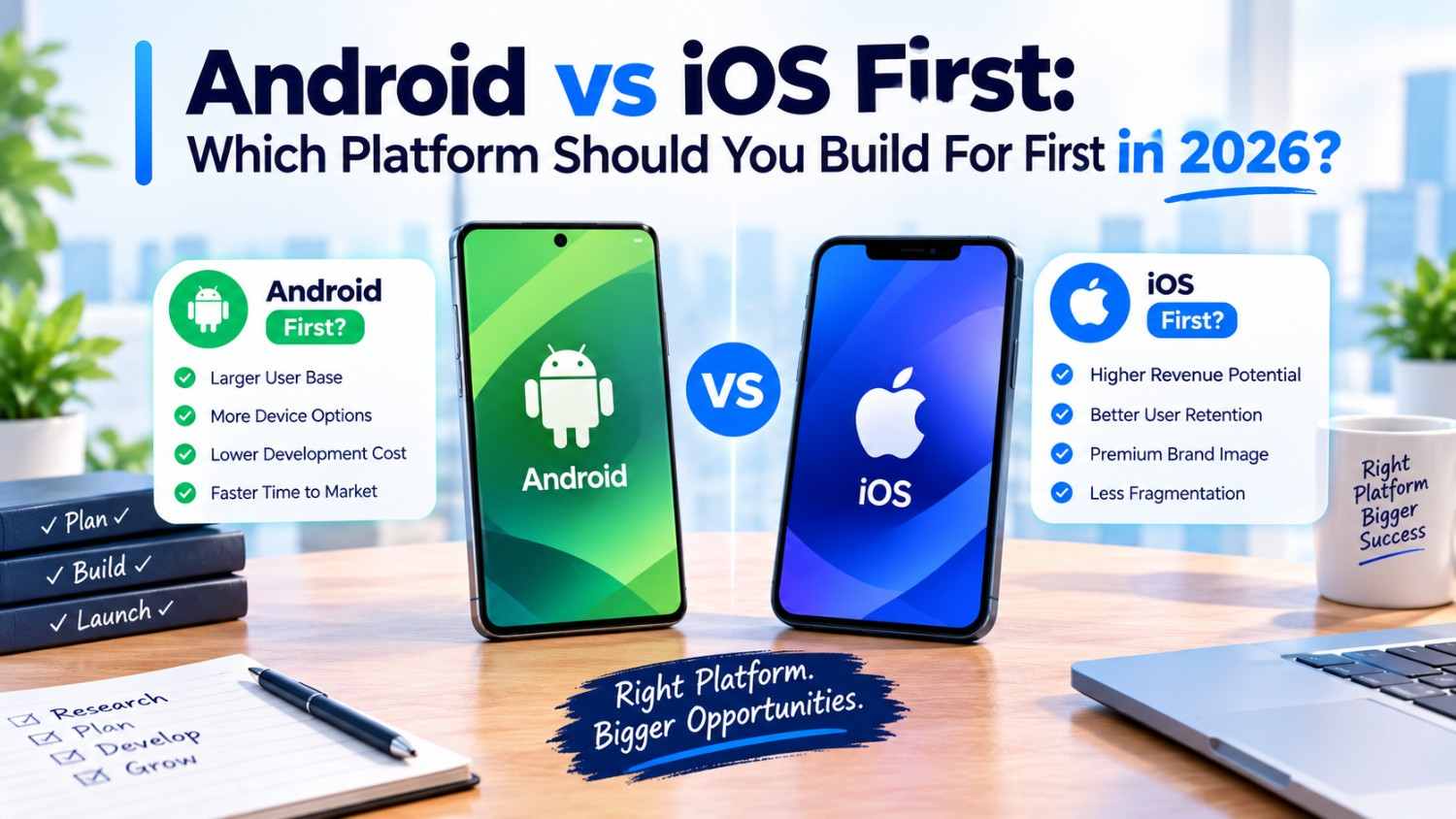
- Platform: Android, iOS, or both.
- Development approach: Native or cross-platform.
- UI/UX: Custom interfaces and complex interactions require more design and development work.
- Backend: APIs, databases, clouds, and administration panels can greatly expand scope.
- Integrations: Payments, maps, analytics, messaging, CRM, and other third-party systems are additive to development and testing requirements.
- Security: Sensitive data and regulated industries require additional controls and testing.
- Testing: More tools, systems, processes, and integrations add to QA.
- Maintenance: OS updates, security fixes, monitoring, bug fixes, and new releases will occur post-launch.
According to a recent 2026 analysis on pricing, the area of backend and API work can also consume a significant portion of the overall price of complex applications.
Native vs Cross-Platform: Which Affects Cost?
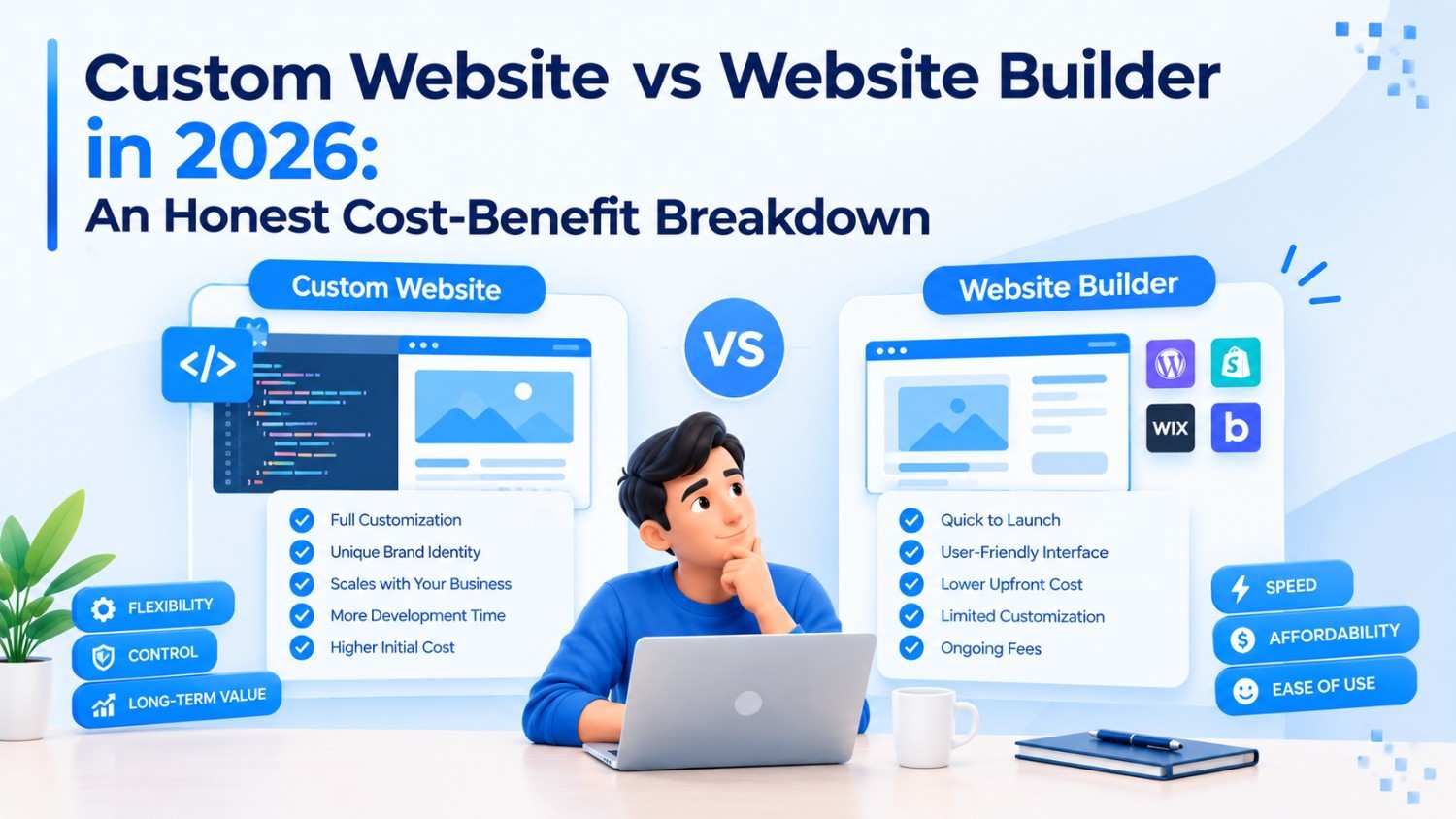
Native development refers to developing platforms and apps individually, generally utilizing technologies based on the platform. Cross-platform development is based on a common codebase to reach a variety of platforms. It is not only about the cost but also the right approach to the product. The same logic shows up in the custom website vs. website builder debate, where the cheaper option upfront is not always the better long-term fit.
To support an MVP requiring Android and iOS, cross-platform development may cut down redundant client-side code and simplify having a common product. Native development can, however, be practical in cases where an application requires high-level platform functionalities, specialised functionality, access to high-performance hardware, or highly tailored platform experiences.
Thus, one should not think that cross-platform is necessarily cheaper or native is necessarily better. The decision must be made depending on the technical specifications, targeted users, development schedule, and future products.
What Does an MVP App Cost?
The MVP app cost is typically cheaper since an MVP is built to determine the viability of the main product and not provide all the functionalities that will be present in the end application. A narrowed MVP may as well be within the price range of $5,00015,000 in cases when the product is composed of simple requirements and a well-defined feature set.
Nevertheless, companies are not encouraged to do away with necessary engineering efforts in an attempt to achieve a lower headline price. Even in an MVP, authentication, backend stability, security, testing, analytics, deployment, and basic documentation might be required. An inexpensive initial version, which must be rewritten to be an entire system, may be more expensive than a well-designed MVP.
It is preferable to discuss must-have features and future features separately. Develop the bare-minimum version that is reliable enough to produce meaningful user feedback, and use the feedback to make decisions on what to develop next.
How to Budget for Your Mobile App
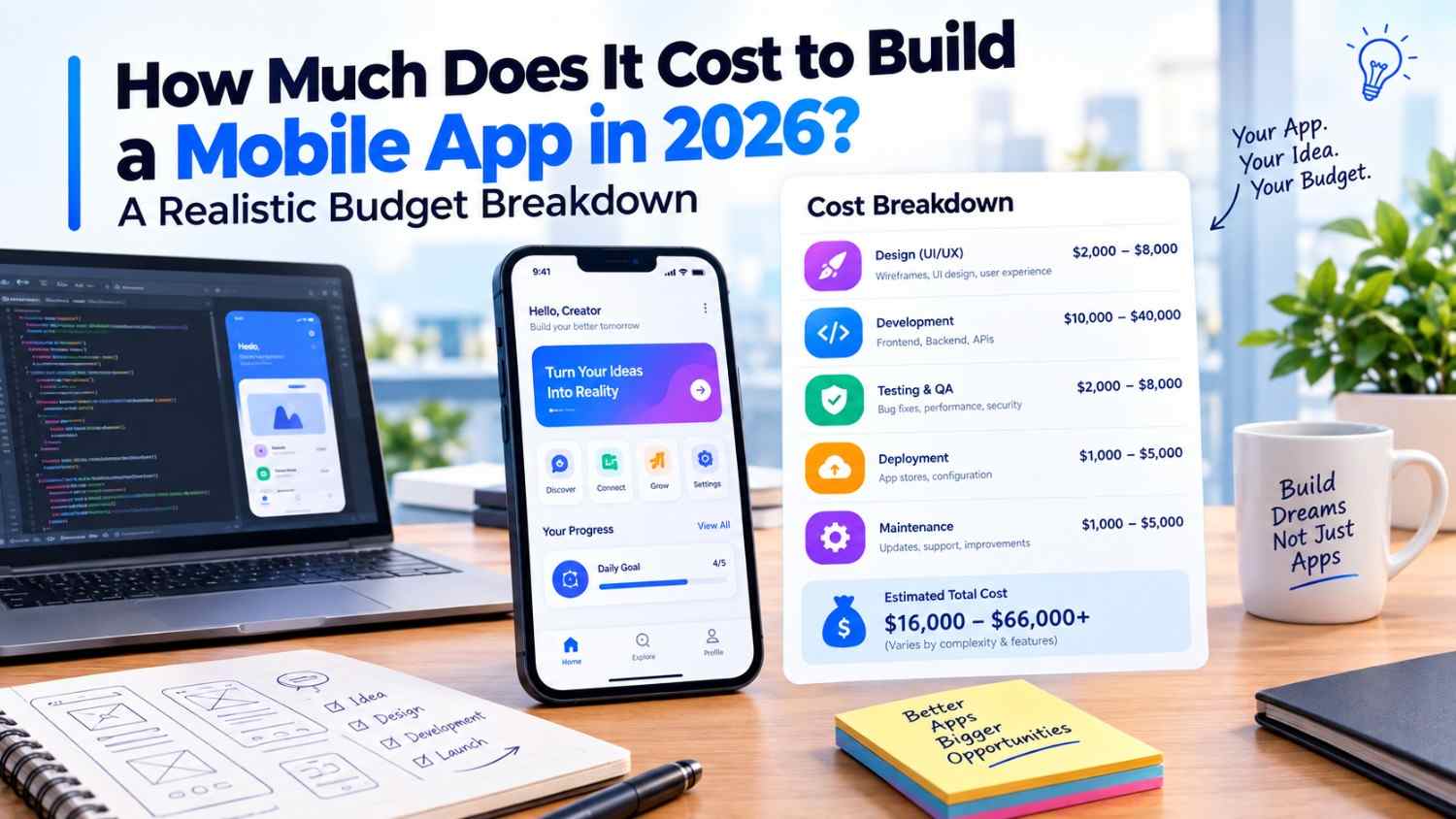
Development is not the only step that needs to be considered in a realistic mobile app budget. The final cost can be influenced by product discovery, user interface/user experience design, development, quality assurance, implementation, infrastructure, and post-launch support.
Before requesting a quote, define:
- Your target platforms
- Core MVP features
- User types and roles
- Required integrations
- Backend requirements
- Security expectations
- Expected launch market
- Post-launch support needs
This simplifies the comparison of quotations since various agencies can otherwise have a very different collection of deliverables and put them under the same headline price.
The development of apps in TechDigital Labs is based on linking product needs with technical architecture, user interface/user experience, development, testing, and scalability. This assists businesses in setting a realistic scope prior to development, rather than incurring huge expenses once the project has been started.
How Much Should You Budget for App Maintenance?
When an application is published in the App Store or Google Play, mobile app development does not stop. OS is updated, devices are updated, dependencies are updated, security problem addressed, new features are demanded by users.
An effective maintenance budget must then include bug fixes, security patching, performance monitoring, dependency upgrades, OS compatibility, store needs, and scheduled enhancements. Certain 2026 industry estimates place a 15-25 percent of development costs per year on maintenance that will keep the product running, though this figure depends upon the complexity of the product and the level of required support.
Final Thoughts
The price to develop a mobile application in 2026 may be a few thousand dollars with a narrowly focused MVP to more than 100,000 dollars with a sophisticated business application. The most common mistake is the treatment of all apps as having the same requirements to develop them.
For planning purposes, think in tiers: $5,000–$15,000 for a lean MVP, $15,000–$50,000 for a mid-complexity application, and $50,000–$150,000+ for complex products. These values are an initial outline, rather than a precise quote.
Mobile app development costs can be best controlled by defining the core product, choosing the right platform strategy, prioritizing essential features, and planning the backend, testing, and security requirements early.
Author Expertise
Written by the TechDigital Labs Editorial Team, specialists in mobile app development, UI/UX design, custom software development, technical implementation, and digital product strategy. The team works with businesses on mobile products where development cost, performance, usability, security, and long-term scalability need to work together.