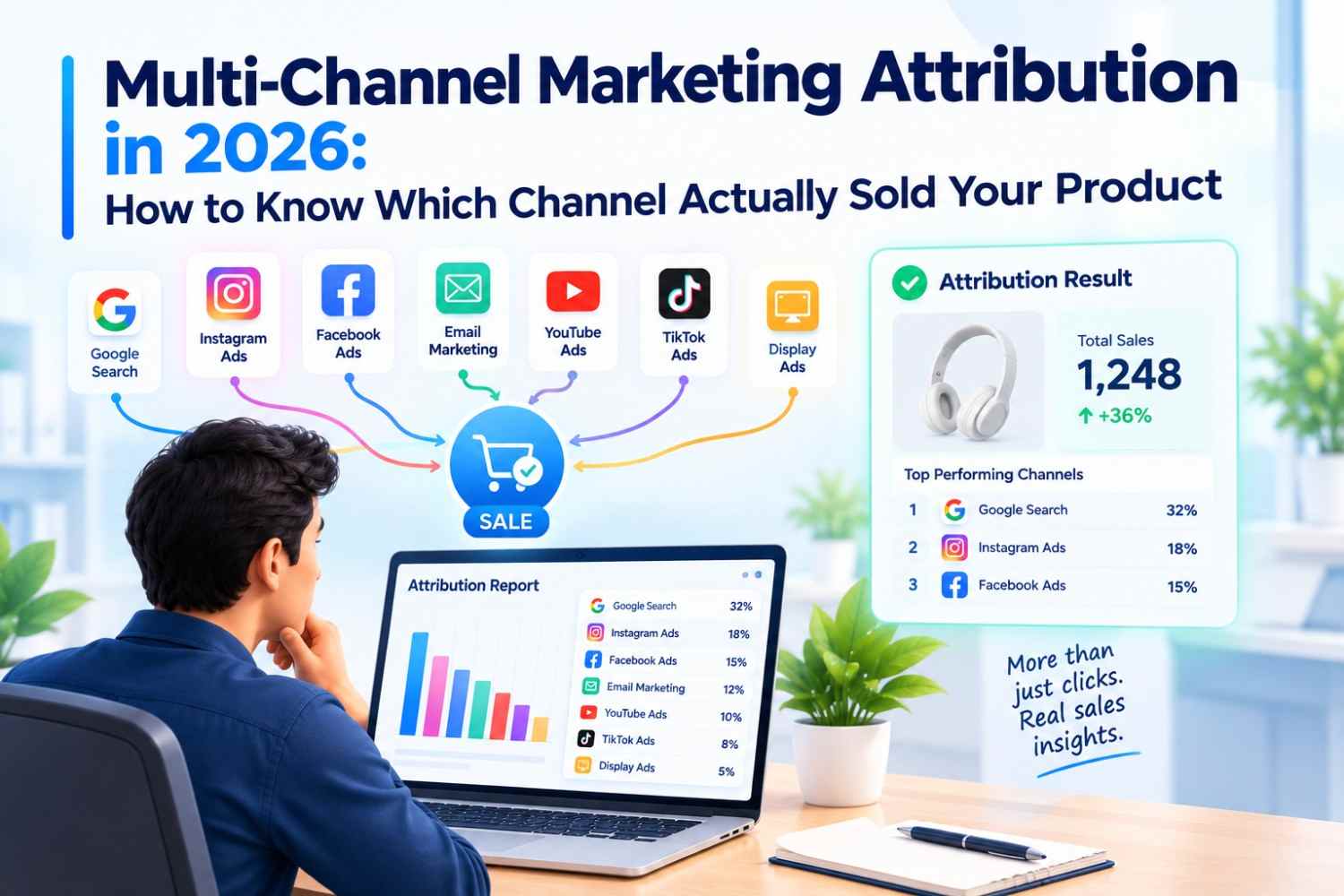
Quick Answer: Multi-channel marketing attribution is one that helps a business to understand the contribution of various touchpoints in marketing to a sale. Rather than giving all the credit to the last click, the customer journey in SEO, PPC, social media, email and other channels can be analysed by businesses. With consistent tracking, CRM data, and data-driven attribution in 2026, there will be a better understanding of which channels are associated with converting and bringing in a specific amount of revenue. Last Updated: September 2026
Introduction:
A customer can use Google to find a product, go back via social media, read an email, and then click a paid search advertisement to buy. Which channel sold it? The answer is rarely as simple as looking at the last click.
That is why multichannel marketing attribution 2026 is an important thing. Attribution assists businesses in knowing how various marketing interactions lead to various activities like leads, purchases, bookings and enquiries. According to Google, attribution refers to giving credit to various interactions on the way of a user to a valuable action. An experienced digital marketing agency can help you build a reliable measurement foundation from the start.
Key Takeaways
- Customers tend to touch on multiple marketing channels before making a purchase.
- Attribution of the contribution of previous touchpoints by use of last-click attribution is possible.
- UTM tracking, analytics, CRM data, and regular conversion tracking develop a more robust measurement base.
- Data-driven attribution is able to assign credit across touchpoints using observed conversion paths.
- Better marketing decisions should be based on attribution as opposed to merely determining one “winning” channel.
What Is Multi-Channel Marketing Attribution?
Multi-channel marketing attribution is a measurement process of the contribution of various marketing channels to a conversion or sale.
Common channels include:
- Organic search
- Paid search
- Social media
- Email marketing
- Display advertising
- Referral traffic
- Content marketing
For example, a customer might follow this path:
Google Search → Blog Post → Social Media → Email → Paid Search → Purchase
A last-click model could give the final paid search interaction all the credit. But previous encounters can have pre-exposed the brand and also created a feeling of trust and propelled the customer to buy. Multi-touch attribution tries to explain multiple interactions rather than the last one being the overall customer experience.
Why Last-Click Attribution Can Be Misleading
Last-click attribution gives conversion credit to the final eligible interaction before a conversion. It is easy and straightforward to learn, and it may underestimate the media that impact customers in the initial stages of purchasing.
Suppose that someone hears about your brand via an SEO article. A few days later, they do so via an email and then go and search your brand name, after which they will click a PPC ad and buy.
The final-click credit can be given to the PPC campaign, although SEO and email were used in the journey.
This does not imply that PPC was not significant. It implies that the last click has been just a step in the direction. Understanding when to invest in SEO vs PPC first helps explain why both channels deserve credit.
Google Analytics offers various attribution choices such as data-driven attribution and last- click attribution, allowing marketers to compare credit allocation in conversion paths.
Marketing Attribution Models You Should Know
A marketing attribution model is a mechanism or guideline for attributing conversion credit to marketing touchpoints.
Last-Click Attribution
The last- click credits the last marketing touchpoint before a conversion. It is simple, yet it might underestimate channels of awareness and consideration.
First-Click Attribution
The credit of first-click is given to the interaction that initially brought the customer into the journey. It will be able to identify the channels that will produce initial discovery but will not indicate what influenced the ultimate purchase.
Linear Attribution
Linear attribution distributes credit across multiple touchpoints. If four interactions are included, each may receive an equal share. This recognises the full journey but assumes every touchpoint contributed equally.
Data-Driven Attribution
Data-driven attribution is an attribution method that uses conversion data to approximate the contribution given by various interactions to conversion.
The data-driven model describes how Google examines the converting and non-converting path and takes into consideration aspects like the timing of interaction, the type of device used, the number of interactions, and the order of interaction.
With sufficient reliable data, this can offer more detailed customer journeys to businesses.
How to Track Which Channel Drove the Sale
Attribution is only as reliable as the tracking behind it.
If campaign information is missing or inconsistent, even an advanced attribution model can produce incomplete results.
Use UTM Parameters
UTM parameters help identify where campaign traffic originates.
Common parameters include:
- utm_source
- utm_medium
- utm_campaign
- utm_content
- utm_term
For example, an email campaign will specify the source to be email, whereas a paid social campaign can specify the platform and the campaign name.
The important point is consistency. Your team should use the same naming structure across campaigns.
Track Meaningful Conversions
Do not measure only page views.
Track valuable actions such as:
- Purchases
- Lead form submissions
- Phone enquiries
- Demo bookings
- Quote requests
- Account registrations
- Product enquiries
Google Analytics uses key events to identify important user actions and provides attribution reporting around those actions.
Connect Analytics With CRM Data
Website analytics can show what happens online, but many businesses complete the sales process offline. A visitor may submit a form, speak with a salesperson, and become a customer weeks later.
Connecting marketing data with CRM information can help businesses trace:
Channel → Lead → Sales Opportunity → Customer → Revenue
This is particularly important for B2B companies and high-value services where the first conversion is not the final sale.
Cross-Channel Tracking in 2026
Cross-channel tracking refers to the process of measuring interactions of customers on various marketing channels rather than analysing one channel at a time. As an example, Google Ads can give conversion data for paid search, a social site can provide conversion data for a social site, and your CRM can hold the actual customers.
These systems are capable of displaying various numbers since they employ various attribution windows, tracking techniques, and conversion specifications. Attribution reports in Google Analytics can assist marketers in exploring the use of key-event paths and the ways in which varying models allocate credit.
The objective is not to ensure that all the platforms record the same number. The aim is to develop a standardized measurement system and get to know the variations. As AI search reshapes how customers find brands, consistent cross-channel measurement matters even more.
Which Channel Actually Sold Your Product?
The better question is often not “Which channel drove the sale?”
It is:
Which combination of channels contributed to the sale?
Consider this journey:
Organic Search → YouTube → Email → Paid Search → Purchase
- SEO may have introduced the customer.
- YouTube may have built familiarity.
- Email may have encouraged consideration.
- Paid search may have captured the final buying intent.
- Calling only paid search the “sales channel” would ignore the rest of the journey.
Attribution assists businesses in learning about such relationships to enable them to make better decisions regarding channel investment.
How TechDigital Labs Uses Attribution for Better Marketing Decisions
TechDigital Labs, a full-service digital marketing company, focuses on connecting digital marketing activity with measurable business outcomes.
SEO should be measured beyond rankings and traffic. PPC should be evaluated beyond clicks. Content should be connected to engagement and conversions. The measurement of social media must be based on its contribution to the levels of awareness, engagement, and demand generation.
As an example, an SEO campaign can create the initial touchpoint, and PPC can subsequently win the demand with high intent. Content can support consideration, while email helps nurture the prospect.
A strong attribution framework allows businesses to see these relationships instead of evaluating every channel in isolation.
TechDigital Labs has accomplished over 400 successful projects, assisted 325+ clients around the globe, and employs 50+ digital experts.
A Practical Attribution Framework for 2026
Businesses do not need an extremely complex system to start.
1. Define the Conversion
Decide what counts as a valuable business outcome, such as a purchase, qualified lead, or booked consultation.
2. Standardise Tracking
Use consistent campaign names, UTM parameters, and channel definitions.
3. Connect Analytics and CRM
Where possible, connect website conversions with sales opportunities and final customers.
4. Compare Attribution Models
Compare last-click and data-driven attribution rather than assuming one model tells the complete story. Google Analytics provides attribution paths and model comparison tools for this purpose.
5. Measure Revenue
Do not stop at conversions. Where the data allows it, connect marketing touchpoints with customer value and revenue.
Final Thoughts
There is rarely one marketing channel that deserves all the credit for a complex customer journey. A customer may discover your business through SEO, engage with social content, return through email, and finally purchase after a paid search click.
In 2026, companies must stop posing the question: Which channel got the sale? Instead, they need to pose the question: Which channels contributed to the sale?
By providing active tracking, CRM integration, measuring conversion, and proper attribution models, businesses are able to make more qualified choices about where they want to spend their marketing budget. A trusted digital marketing services provider can help turn these insights into a clear, measurable growth plan. To build an attribution setup that fits your business, you can get in touch with the team for tailored guidance.
Author Expertise
This article is prepared by the TechDigital Labs team, a data-driven digital marketing partner, with experience across SEO, PPC, content marketing, analytics, conversion optimisation, and digital growth strategies.