Quick Answer: A digital marketing agency helps businesses turn online visibility into measurable growth through SEO, paid ads, content, social media, web strategy, and AI search. In 2026, the strongest agencies go beyond single-channel work. They use data, technology, customer insight, and integrated strategies to attract the right audience and improve leads, sales, and revenue. Last Updated: September 2026
Introduction:
Digital marketing goes beyond advertising or simply optimizing a webpage for Google. In 2026, the customer is now able to find a business by using search engines, AI, social media, maps, videos, reviews, and paid campaigns. With the growth of these channels, there is even greater competition for attention and trust from the business.
This transformation has complicated the task of a digital marketing agency. This means that agencies must integrate search, content, paid, social, websites, data, and AI search into a single growth plan. However, not all services generate equal business value.
This article further examines the strategies that can be used to grow, the impact of AI on the industry, and how businesses can analyse the performance of the agency. It also looks into the combined strategy employed by TechDigital Labs to demonstrate how these strategies are practical.
Key Takeaways
- Digital marketing agencies relate online channels to business objectives.
- As a broader growth system, SEO, PPC, content, social media, and AI search are now all integrated.
- Conversion and data tracking assist agencies in attributing marketing activity to leads, sales, and revenue.
- In 2026, powerful agencies integrate AI resources with human strategy, technical expertise, and real market expertise.
Why Digital Marketing Agencies Matter More in 2026
An online marketing agency assists organizations in strategizing, coordinating, and optimizing their online marketing operations based on objectives of growth.
The need for this work has grown as customer journeys have become more complex. Brands are discovered today via Google Search, Artificial Intelligence search engines, social networks, maps, review websites, videos, and sponsored advertisements. Global internet use also continues to expand, with a large majority of the world’s population now online. These shifts mirror some of the biggest digital marketing trends shaping the industry this year.
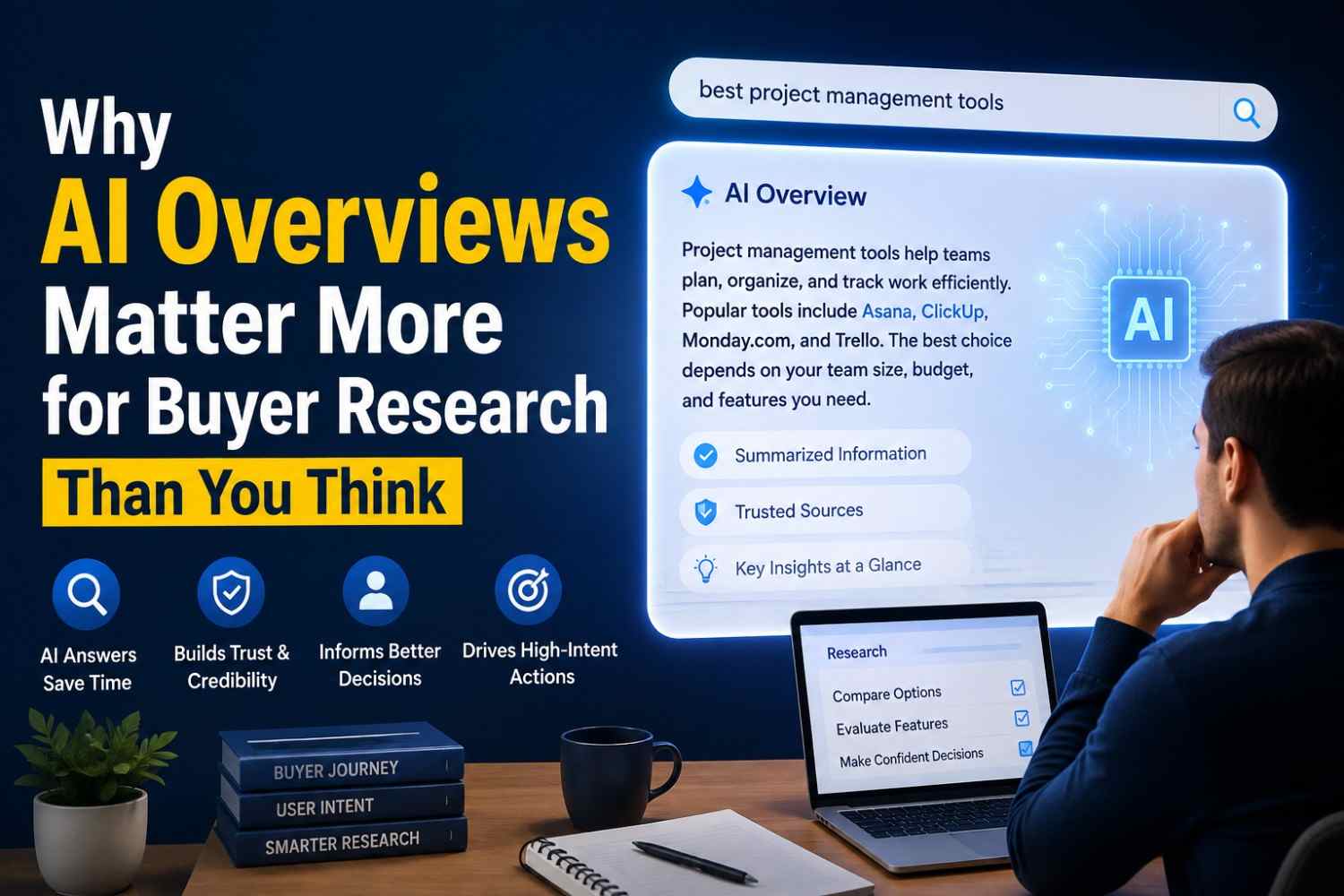
Meanwhile, AI is altering the way in which individuals search. Industry research from HubSpot points to a growing share of consumers now using AI-driven search, and many marketers rank recent search updates among the most important trends to watch this year.
Thus, companies cannot do without a website and ads. They require an explicit process that relates to discovery, trust, conversion, and retention.
What a Digital Marketing Agency Actually Does
A digital marketing agency manages online marketing activities that help a business reach customers, build demand, and generate measurable outcomes. But it is more complicated than sharing content on social media or ranking a web page. A great agency begins by researching the business, the market, competitors, the audience, and the objectives.
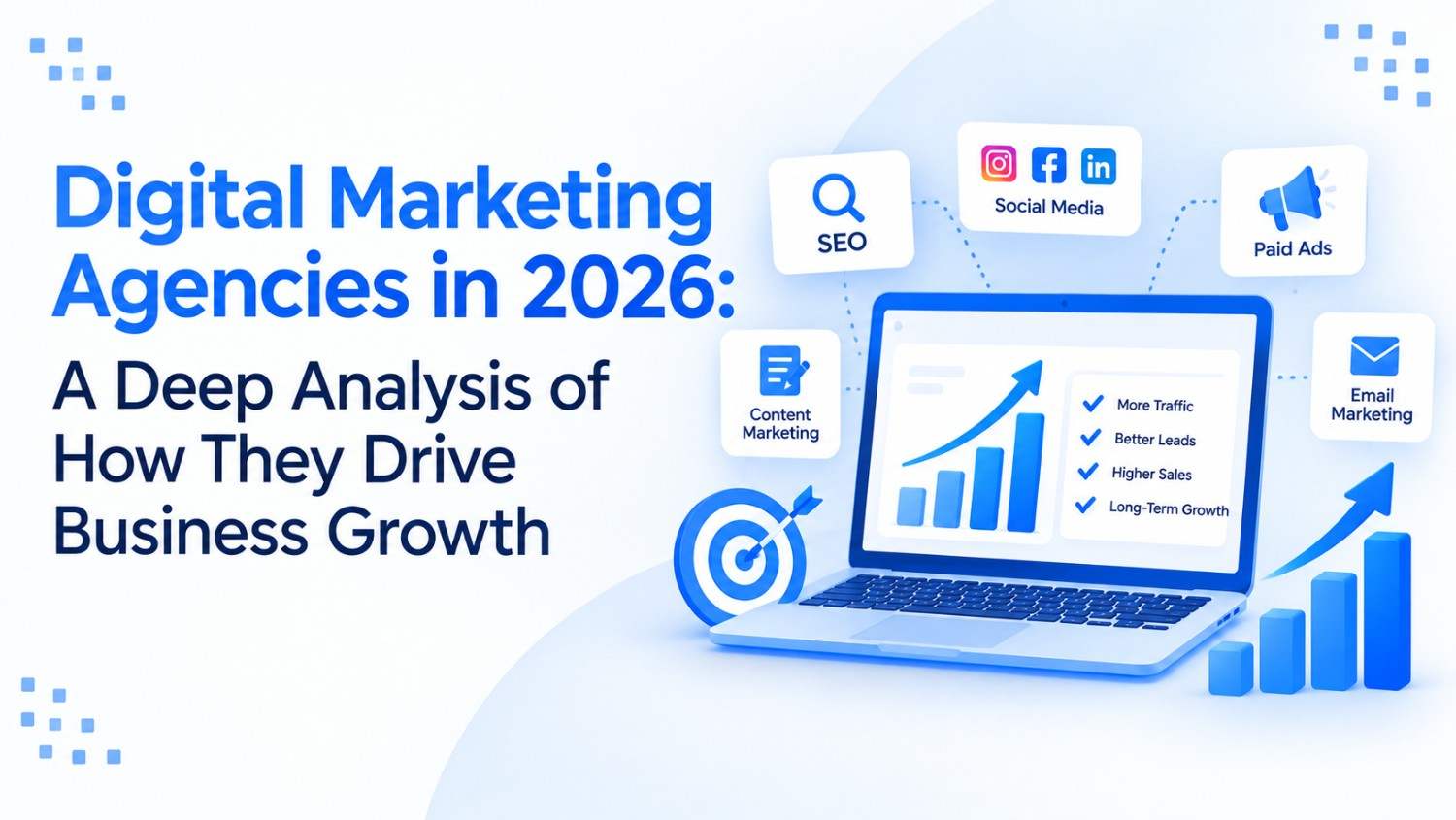
It then identifies the appropriate channels and develops a strategy around it. This may consist of SEO, Local SEO, E-Commerce SEO, PPC Advertising, content marketing, social media marketing, website development, AEO, GEO, email marketing, and conversion optimisation.
The key difference is coordination. An agency does not need to focus on each channel as a distinct job, but can apply knowledge gained in one channel to enhance another channel. Content can be informed by search data. Ad data can reveal strong customer messages. The website data will be able to indicate exits. All these signals produce a more powerful growth plan.
The Core Services Behind Modern Agency Growth
The reason why modern digital marketing agencies amalgamate multiple services is that customers do not always follow a single path through the process of discovery to purchase.
SEO and Organic Search
Search engine optimization (SEO) enhances the capacity of a website to rank among the relevant searches. It covers technical health, content, internal links, search intent, authority, local visibility, and user experience. SEO remains relevant to AI search as well: according to Google, its AI search capabilities are still built on fundamental Search systems, so standard SEO best practices continue to matter.
Paid Advertising
PPC gives businesses a way to reach selected audiences through paid placements. Agencies can test keywords, audiences, creative, landing pages, bids, and budgets. Measurement is the source of value. The data from the campaigns can demonstrate which messages and audiences generate valuable actions.
Content and Social Media
Content answers customer questions and helps a brand build expertise. Social media has the potential to reach further into an audience and establish additional touchpoints. Powerful agencies do not just generate content and fill a calendar. They relate it to customer needs and business objectives.
AEO and GEO
AEO and GEO concentrate on visibility within the answer engines and generative search experiences. This is important as customers are now able to ask more specific questions and get answers in the form of AI with references to some sources of information.
Why Data and Measurement Define Agency Performance
In data-driven marketing, decision-making is based on measurable signals rather than on guesswork. Traffic is easy to bring, but not too much. Qualified leads, conversion rate, customer acquisition cost, return on ad spend, revenue, and customer value should also be monitored by the business.
This is more crucial in 2026 since marketers are challenged by the apparent measurement issue. Survey data from HubSpot shows that measuring marketing ROI is consistently cited as one of the biggest challenges marketers face.
The three questions that good reporting should answer are: What happened? Why did it happen? What do we change next?
Google has also launched specific Search Console visibility reporting for generative AI features, which provides site owners with additional information about the performance of the site in AI Overviews and AI Mode. For a closer look at how these results compare with classic rankings, see this breakdown of AI Overviews vs traditional SEO.
A Closer Look at TechDigital Labs' Integrated Approach
TechDigital Labs demonstrates how an integrated digital marketing agency may unite various capabilities into a single strategy. The company combines Digital Marketing, PPC Advertising, Content Marketing, Social Media Marketing, Brand Identity, UI/UX Design, Web Development, App Development, and Custom Software Development.
The broader model is important, as marketing issues tend to be interconnected. A search problem may involve weak content. The conversion issue can be related to the UX of the site. A paid campaign can unveil a good audience segment that will be able to sustain an organic strategy later.
TechDigital Labs has had 400+ successful projects, 325+ clients around the globe, and a team of 50+ digital specialists. These results are indicative of a model that is strategy-based, execution based, technology-based, and optimisation-based.
FAQs
1. Is hiring a digital marketing agency worth it in 2026?
Yes, if the agency has a clear strategy, proven experience, and measurable goals.
2. Should a business hire an agency or market in-house?
It will be based on your budget, team, skills, and marketing requirements. There are specialists in various fields available at agencies.
3. How long does digital marketing take to show results?
Paid advertisements may provide results in a short period, whereas SEO and content tend to take more time to establish their presence and develop. This SEO vs PPC comparison breaks down which to prioritize first.
4. What should I ask before hiring an agency?
Ask about its strategy, experience, KPIs, reporting, and how it will connect marketing work to leads or revenue. This guide on how to choose the right SEO agency walks through the key questions in more detail.
5. Can AI replace a digital marketing agency?
No. AI can speed up tasks and analysis, but strategy, creativity, expertise, and human judgement still matter.
Conclusion
A digital marketing agency adds value by linking strategy, technology, content, search, advertising, and measurement to actual business objectives. In 2026, there are an increasing number of ways in which businesses may reach their customers. There is also greater competition for their attention. Thus, it is essential to focus on the right channels, customer intent, data utilization, and enhancing the overall customer experience.
The most powerful agencies are not attracted to traffic per se. They create frameworks that assist in making companies easier to locate, easier to believe, and easier to select. TechDigital Labs offers the ability to combine digital marketing, search, AI visibility, creative, and software services into a single team for any business interested in this integrated approach.
Ready to turn online visibility into consistent leads and revenue? Book a free strategy consultation to see how an integrated digital marketing approach can work for your business.
Author Expertise
Written by Memoona Zafar Butt, Senior SEO & Content Strategist at TechDigital Labs, with over 8 years of experience in search engine optimization, answer engine optimization, and B2B content strategy. Reviewed by the TechDigital Labs Editorial Team, specialists in SEO, AEO, GEO, digital marketing, content strategy, web development, and digital growth, with a focus on practical strategies that support business goals.
Editorial Disclosure: This article is independently researched and written to reflect current SEO and digital marketing practices. TechDigital Labs is referenced as a working example of an integrated agency model; this is not a paid endorsement.