Quick Answer: The best way to choose an SEO agency is to look beyond rankings and low prices. Check its experience, past results, SEO process, reporting, team, pricing, and communication. Before you hire, ask clear questions about strategy, content, technical SEO, links, goals, and how the agency will measure real business growth.
Written by Memoona Zafar Butt, Senior SEO Strategist at TechDigital Labs - has over 9 years of experience in technical SEO, content strategy, and search-visibility audits. She specializes in Local SEO, Answer Engine Optimization, and Generative Engine Optimization, and has helped businesses across e-commerce, SaaS, and local-service industries build measurable, revenue-focused search programs.
Editorial Disclosure: TechDigital Labs provides SEO and digital marketing services, including some of the services referenced in this article. Our editorial guidance reflects general industry best practices, and any mention of our own services is clearly identified as such.
Last Updated: September 9, 2026
When you choose an SEO agency, you choose a long-term partner to enhance your search visibility and business development. The right agency can resolve technical problems, improve content, build authority, and help your website reach the right audience through effective search engine optimization services.
Yet, time and money can be wasted by the wrong agency. It can be limited to rankings, poor links, weak content, or reports on items not reflecting actual business outcomes. Thus, do not sign a contract without asking the correct questions.
Key Takeaways
- Request actual case studies, client outcomes, and obvious evidence of previous work.
- Ask the agency what, who, and how frequently it will report progress.
- Avoid agencies that guarantee a certain number of positions or ambiguous SEO packages.
- Select one that associates SEO effort with traffic, leads, sales, and business objectives.
Why Choosing the Right SEO Agency Matters
An SEO company controls a portion of your online search expansion; therefore, its choices can influence your webpage, brand, traffic, and leads.
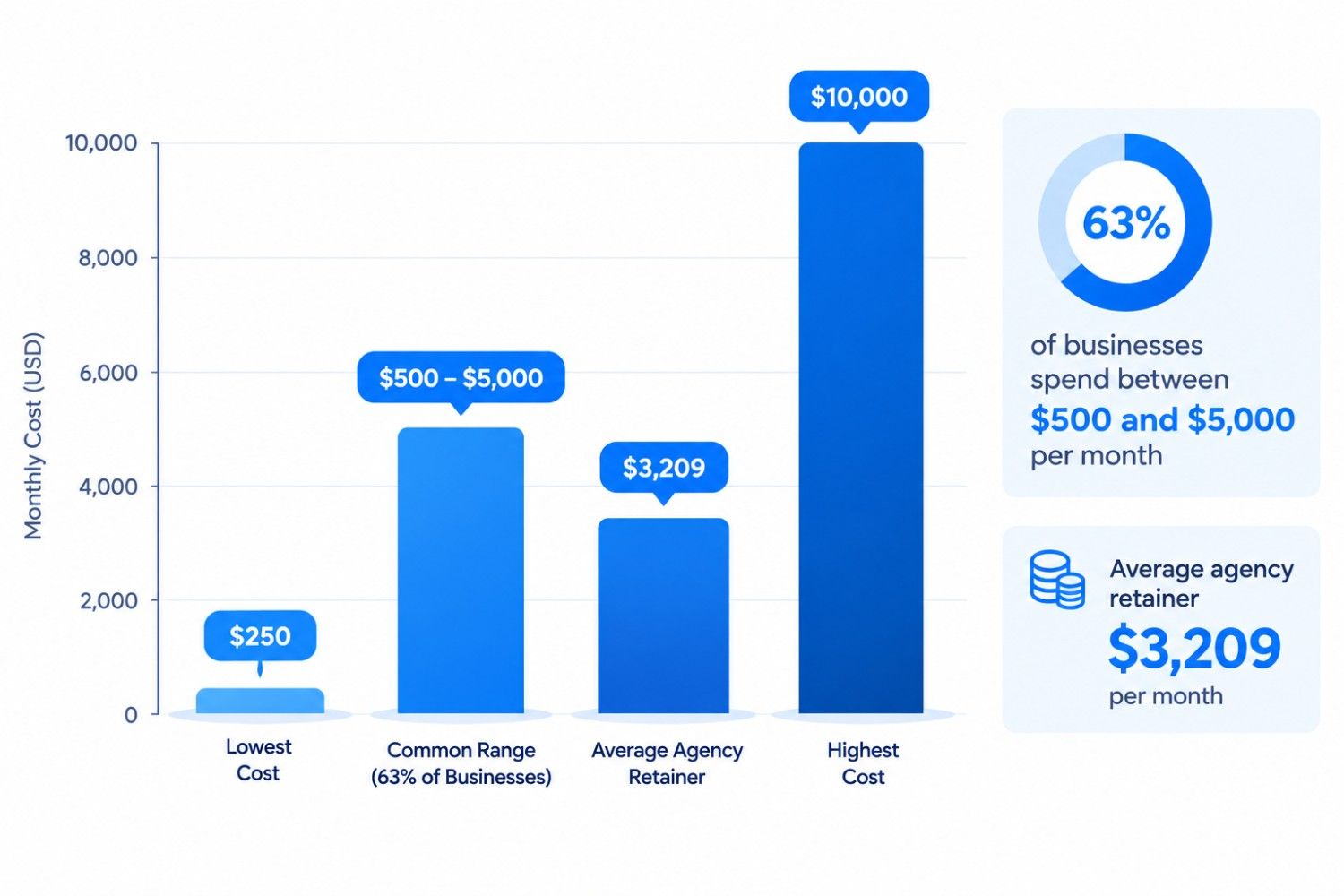
SEO is a continuous investment as well. Ahrefs also conducted a survey of 439 SEO providers and discovered that SEO services commonly range from $250 to $10,000 per month, while 63% of businesses spend between $500 and $5,000 per month. The average agency retainer in the survey was about $3,209 per month.
These numbers demonstrate why you must make comparisons based on value, not only price. An inexpensive package can provide minimal work. An increased fee can be explained if the agency does more strategy, technical, content, authority building, and explicit reporting. For a fuller breakdown of typical pricing tiers, see our guide on how much SEO costs.
10 Questions to Ask an SEO Agency Before You Hire
1. What Is Your SEO Strategy for My Business?
A strong SEO strategy should connect everyday search work directly to your business goals, not just chase rankings for their own sake. Have the agency explain how it will evaluate your site, competitors, market, traffic, search intent, and your current visibility.
A strong response should go beyond keywords. It can cover technical SEO, content gaps, site structure, internal links, authority, conversion pages, and competitor analysis. Be cautious if the agency hands you a fixed plan before it has even reviewed your website.
2. Can You Show Me Relevant Case Studies?
Real case studies show exactly how an agency solved an SEO problem for an actual client, not just polished before-and-after screenshots. Ask for examples that match your industry, business size, location, or SEO goals.
Look for measurable details such as:
- Organic traffic growth
- Search visibility
- Qualified leads
- Sales
- Ranking improvements
- Technical improvements
- Time frame
Do not believe vague claims like, “ We increased traffic by 300 percent.” Ask what changed, how it changed, and what business outcome resulted.
3. Who Will Actually Work on My SEO?
The individuals who perform the work may significantly influence the quality of SEO. Inquire about who will do your account, technical SEO, content, link building, and reporting. Also enquire whether it is in-house or outsourced work.
It is a good idea to know who makes important decisions and who reviews the work. This is important as SEO may take on a technical aspect, content depth, developer feedback, and business acumen.
4. What Will You Do in the First 90 Days?
The initial 90 days ought to set out proper research, fixes, priorities, and quantifiable progress. Ask the agency to tell you what the first thing is. A useful plan may include:
1. Technological audit and site audit
2. Competitor research
3. Keyword and intent analysis.
4. Content gap research
5. Priority fixes
6. On-page improvements
7. Content development
8. Authority work
9. Performance tracking
This question will help you to observe whether the agency possesses a real process or it is a sales pitch.
5. How Will You Measure SEO Success?
SEO success is about enhancing business performance, not just ranking higher on keywords. Inquire about metrics the agency will measure.
Helpful measures can be:
- Organic traffic
- Search impressions
- Qualified leads
- Sales
- Conversion rate
- Revenue
- Non-branded traffic
- Important keyword visibility
- Technical health
- Content performance
A common complaint among business owners and marketers is that SEO reports focus too heavily on rankings and traffic, when what actually matters is the leads or sales those efforts produced.
6. What Will Be Included in My Monthly SEO Work?
Your monthly SEO work should tie directly back to your strategy, not just repeat generic tasks. Ask exactly what you will receive each month.
For example, the plan can consist of:
- Technical SEO fixes
- Keyword research
- Content updates
- New content
- Internal linking
- On-page SEO
- Local SEO
- Link building
- Competitor analysis
- Reporting
Do not accept packages that will simply guarantee you a certain number of keywords or blog posts but fail to clarify why these activities are important. This is a common issue with SEO proposals generally: the number of keywords or blog posts promised says nothing about the actual quality or usefulness of the work.
7. How Do You Build Backlinks?
Solid link building means earning relevant, authoritative backlinks that genuinely support your site, not just accumulating numbers. Ask where the agency sources links and how it verifies their quality.
An agency that is good must describe its connection process well.
Ask:
- Where do you get link opportunities?
- Do you consult pertinent publications?
- What do you do to test site quality?
- Do you use paid links?
- What do you do to prevent spam?
- Will I be provided with a list of constructed links?
Be cautious of those agencies that offer hundreds of backlinks per month but do not tell you how they do it.
8. What is Your SEO Content?
SEO content must meet the search intent but offer useful, accurate, and original information. Inquire about who does the research, writing, editing, and reviewing. Also ask whether your subject-matter experts can contribute.
Powerful content must be a reflection of actual knowledge. It must provide responses to customer inquiries, handle claims, provide relevant examples, and not be filler.
This matters even more in 2026, as more searches are answered directly through AI-generated overviews. Both traditional search and generative search visibility depend on clear, useful, and trustworthy information.
9. What Will My SEO Reports Include?
An SEO report must explain what has changed, what has been done, what has been improved, and what is to be done. Request a sample report to be shown to you.
An effective report can demonstrate:
- Work completed
- Organic traffic
- Search impressions
- Rankings
- Leads
- Conversions
- Technical issues
- Content progress
- Links earned
- Key wins
- Problems
- Next steps
Business owners frequently cite unclear reports and missing business data as some of the most frequent frustrations with agency reporting. A good report must aid your decision-making and not present pages of charts.
10. What Are Your Contract and Cancellation Terms?
The terms of any contract determine your working relationship and finances with the SEO agency.
Ask about:
- Monthly cost
- Setup fees
- Minimum contract period
- Notice period
- Cancellation terms
- Extra service costs
- Reporting fees
- Website access
- Content ownership
- Account ownership
Read the contract before signing. Also, make a query about what will become of your site, content, accounts, and data in the event that you terminate the relationship. Openness in this step may help avert significant issues in the future.
Red Flags to Watch For
SEO red flags are clues that an agency might not provide the amount of strategy, transparency, or quality that you require.
Be alert of agencies that:
- Guarantee a #1 ranking
- Promise instant results
- Hide their methods
- Refuse to show case studies
- Focus only on keyword rankings
- Build large numbers of low-quality links
- Publish vague, indistinct monthly reports.
- Lock you into ambiguous, long-term agreements.
- Do not tell how work is done.
- Give the same strategy to all the clients.
Other common warning signs among businesses researching SEO providers include generic reports, spammy links, weak case studies, overly long contracts, and empty promises.
How TechDigital Labs Can Help
TechDigital Labs is a full-service digital marketing agency offering SEO services built around technical health, search intent, content, authority, and quantifiable visibility. Its services include Technical SEO, On-Page SEO, Off-Page SEO, Local SEO, E-Commerce SEO, Enterprise SEO, SEO Content Writing, and SEO Audits.
The company further offers Answer Engine Optimization, Generative Engine Optimization, Digital PR Outreach, Content Marketing, Website Copywriting, PPC Advertising, Web Development, and Custom Software Development.
This is an expanded scope of services that can assist the business in tying SEO to the broader digital strategy.
Final Thoughts
The optimal method of selecting an SEO agency is by comparing its procedure, evidence, individuals, reporting, and business orientation. Do not allow a slick sales pitch to make the choice. Ask direct questions. Request evidence. Review the contract. Confirm what work you will get every month. This is the same standard we hold ourselves to as a trusted digital marketing agency.
Above all, you need to select an agency that will communicate the idea of SEO in simple language and will relate its activities to your true objectives. The right partner must not merely strive to achieve higher rankings. It ought to assist your business in gaining greater exposure, qualified traffic, leads, and long-term search worth.
Ready to work with a team that ties every recommendation back to real business results? Explore our SEO services or get in touch with our team to start with a straightforward audit of where your site stands today.
Frequently Asked Questions
How do I know if an SEO agency is good?
Seek case studies that are pertinent, evident strategy, competent employees, ethical practices, and transparent reports. An effective agency ought to justify its activities and relate SEO outcomes to the business objectives.
What are some questions to ask an SEO agency?
Inquire about strategy, previous performance, content, backlinks, reporting and KPIs, price, and terms of contract. These questions will assist you in comparing agencies and identifying any vague offers before you employ.
Should an SEO agency guarantee rankings?
No. There should not be any promise of a certain Google positioning that is made by a credible agency.
The outcome of SEO is based on the competition, search systems, your site, and a myriad of other factors.
How much does an SEO agency cost?
SEO costs depend on scope, market, and agency expertise.
Ahrefs discovered that 63 percent of the businesses that were surveyed spend between $500 and 5,000 monthly on SEO services. If you are also weighing SEO against paid ads, our guide to choosing between SEO and PPC can help you prioritize your budget.
What is the biggest SEO agency red flag?
Guaranteed rankings, huge numbers of backlinks, or instant results should be a cause for concern. Other things to look out for are ambiguous reports, bad case studies, ambiguous contracts, and poor communication.