Quick Answer: App Store Optimization (ASO) helps your app get found and chosen in crowded app stores. In 2026, strong ASO combines relevant keywords, clear metadata, useful screenshots, ratings, reviews, localisation, app quality, and regular testing. The best strategy also treats the Apple App Store and Google Play as different search systems with different rules and user needs. Last Updated: September 2026
Introduction
App stores are now a very competitive environment for discovering apps. According to Sensor Tower, almost 150 billion apps were downloaded on iOS and Google Play in 2025, and individuals dedicated approximately 5.3 trillion hours to mobile applications. Such activity leaves a big opportunity, but it also implies that a new app will have to compete to draw attention.
App Store Optimization provides a means through which developers can enhance that process of discovery. Nevertheless, contemporary ASO does not simply consist of the addition of keywords to an app title. It also deals with how users perceive the listing, the quality of the app, the trust established through reviews and the effectiveness of the store page in converting views into installs. If you’re planning a new mobile product, partnering with a full-service digital growth and app development agency can help align ASO with your broader launch strategy from day one.
Key Takeaways
- ASO enhances the discovery of apps, aligning your listing with suitable searches and user intent.
- Keywords are important, yet conversion, reviews, quality of apps, and listing assets are influential factors of app performance.
- The metadata and testing tools used in the Apple App Store and Google Play are not identical; thus, a single ASO plan cannot be copied over the two.
- ASO is best a continuous research, testing, measurement, and improvement process.
What Is App Store Optimization in 2026?
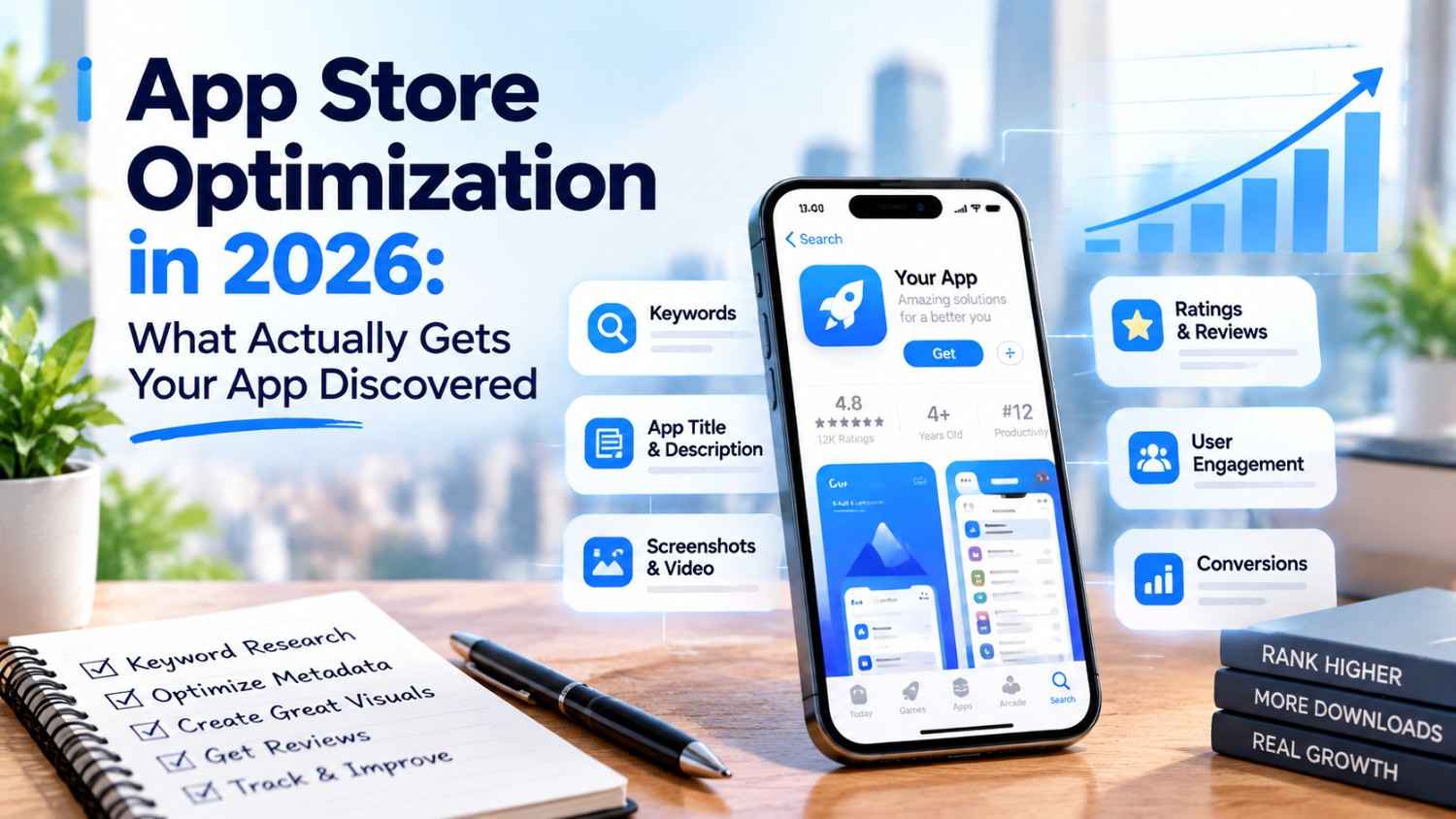
The process of enhancing the presence of an app in a store to enable the relevant users to find it and make decisions to install it is known as App Store Optimization. It integrates work oriented on search with conversion-oriented enhancements.
Keywords continue to be a significant component of ASO, although they are not the sole aspect of the process. Apple claims that the name of an app, its category, metadata, icon, screenshots, and other product page features can influence app discovery and its utilization by users.
Google Play further mentions that the quality of apps and the pre-install experience, which involves the icon, title, screenshots, videos, description, and links, are also included in its discovery system.
What Actually Gets an App Discovered?
Relevant search intent is the starting point for app discovery. Your app should use language that matches the words and needs of its target users.
Relevant ASO Keywords
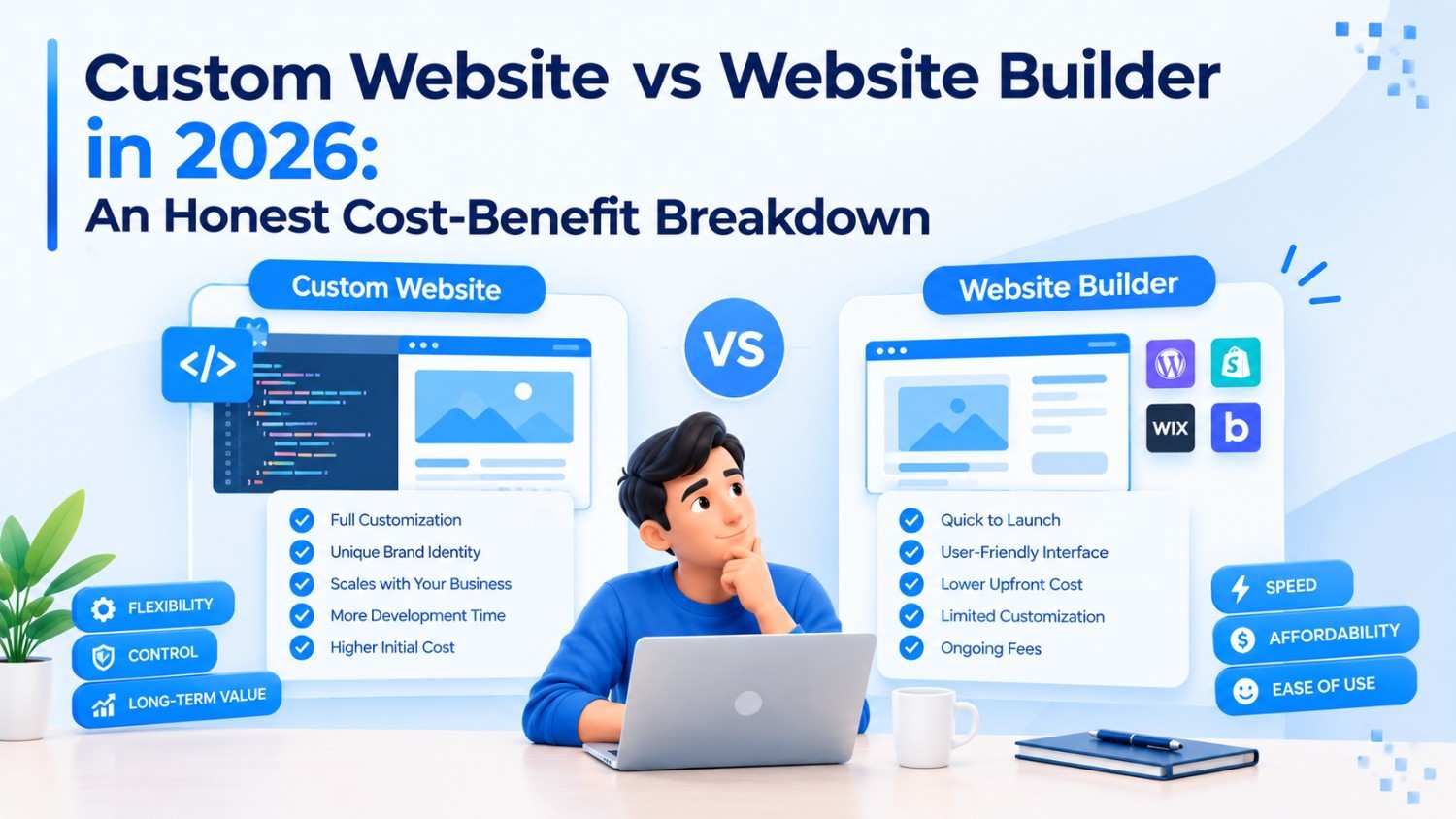
A strong ASO keyword strategy starts with the app itself. First, define its main function, audience, use cases, and benefits. Then search for words that users can use to seek that solution. The same build-quality trade-offs that come up when comparing a custom website vs a website builder also apply to deciding how much to invest in your app’s technical foundation.
An example is that a fitness app should not automatically target any terms that have anything to do with fitness. It must target words that reflect what it actually does, e.g., home workouts, tracking workouts, running plans, or calorie tracking when the features are actually included in the product.
The goal is relevance, not volume. A high-volume keyword would result in impressions and can still achieve weak results unless the user is interested in the app.
Clear Metadata
You should use your app name, subtitle, descriptions, and keyword fields to describe what the product does without cramming it with keywords.
Apple supports up to 30-character-long app names and emphasizes the significance of a straightforward name, which will help users understand the app. Another recommendation that Apple makes is to use relevant categories and localized product information in other markets. Clear, benefit-led metadata is easier to produce with the help of experienced SEO content writing services that understand keyword-to-conversion language.
ASO Keyword Strategy 2026: What Should You Target?
ASO keyword plan ought to bridge search demand, product relevance, and user desire. To begin with, make a general list of available terms, and then categorize them based on the issues and tasks your app addresses.
A practical process is:
- Research terms used by your target audience.
- Group related keywords by search intent.
- Review competitor listings for useful ideas.
- Remove terms that do not match your app.
- Map important terms to the correct metadata fields.
- Track ranking and conversion changes.
- Test and update the strategy over time.
Do not treat keyword research as a one-time task. Changes in search behaviour, new features being introduced by competitors, and users might begin to use new terms. ASO strategy (two years 2026) should be regularly reviewed.
Why Screenshots, Icons and Reviews Matter
Store listing assets help turn app discovery into downloads. A user may find your app through search but still leave if the listing does not quickly explain its value.
Your first screenshot should communicate a clear benefit. Subsequent screenshots may display noteworthy features, processes, outputs, or use cases. It must also have your icon, which can be recognised even at a small size.
Another trust signal is that of reviews. There should be no aim to get fake feedback; it must be done in order to get genuine feedback. According to Google, ratings and reviews can inform developers about quality and support issues, and its discovery system takes into account the experience using the whole app.
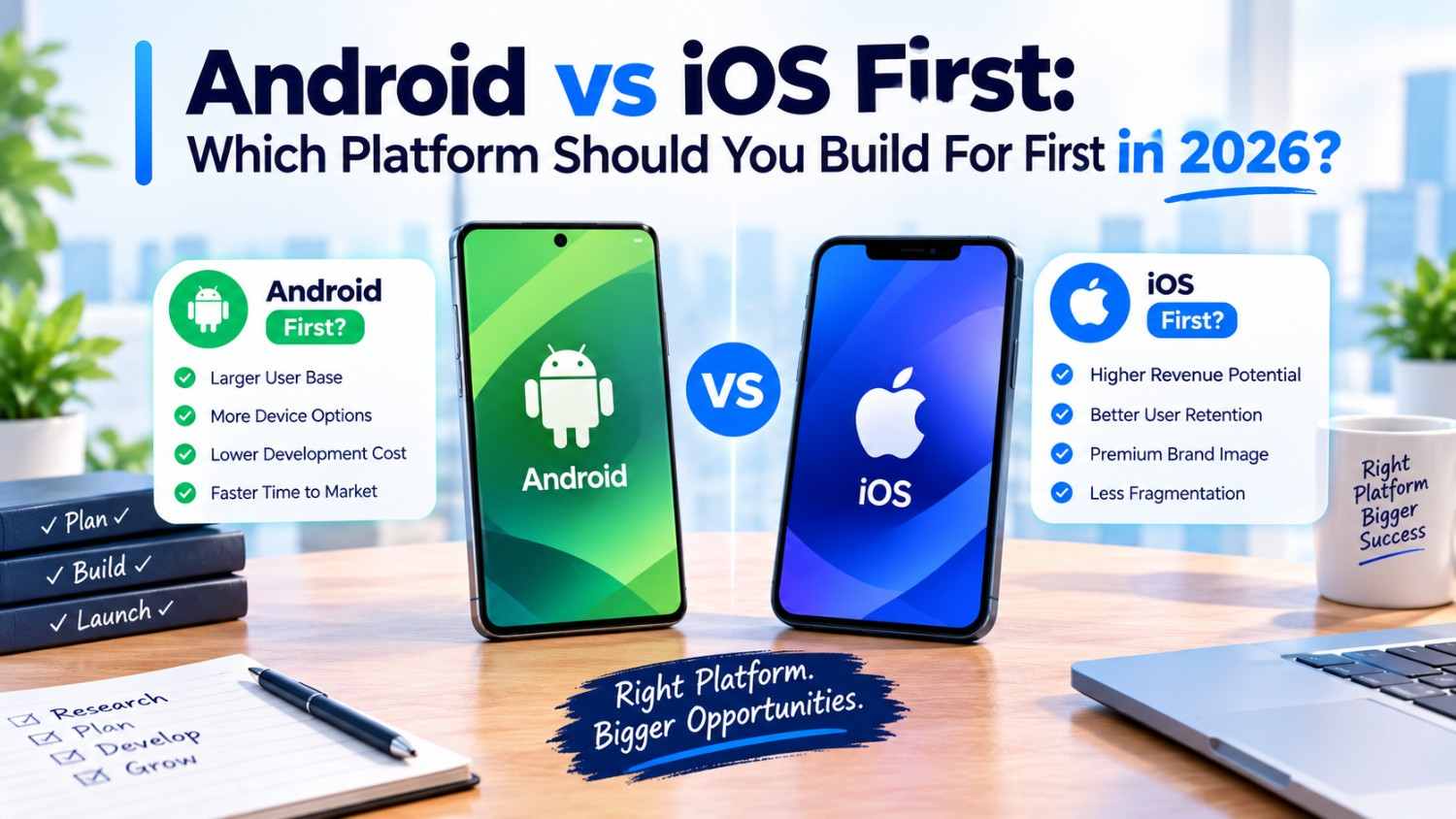
App Store vs Google Play: Why ASO Is Different
Different tools and metadata systems are offered on the Apple App Store and Google Play, and thus ASO needs to be customized accordingly.
Apple offers Product Page Optimization
Apple offers Product Page Optimization on the App Store that allows developers to test various icons, screenshots, and previews of an app. Apple claims that a product page can be tested with up to three variants.
Custom Product Pages
Custom Product Pages are also supported by Apple. Up to 70 versions of an App Store product page can be developed, with varying screenshots, promotional text, and keywords. It is possible to target certain audiences with these pages and also have these pages display in the appropriate search results.
Store Listing Experiments
Store Listing Experiments testing graphics and text are offered on Google Play. Install, open, or pre-registration metrics can allow developers to compare variants.
These tools put it on record one point: ASO is not to be guessed.
ASO vs App Marketing: What Is the Difference?
ASO puts emphasis on enhancing the process of app-store discovery and conversion, whereas app marketing touches the broader aspect of attracting users.
ASO can include:
- Keyword research
- Store metadata
- Screenshots
- Icons
- Ratings and reviews
- Listing tests
- Localisation
App marketing can also include:
- Paid advertising
- Social media
- Influencer campaigns
- Content marketing
- Email marketing
- Public relations
- Partnerships
The two areas work together. Paid campaigns may bring more people to your store page, while ASO can help that page convert relevant visitors into users.
How TechDigital Labs Can Help With ASO and App Development
TechDigital Labs connects App Development with the wider needs of app discovery and growth. The team has direct experience with Android app development and can consider ASO during the product planning and development process rather than treating it as an afterthought.
This may involve app positioning, user intent study, store assets, user interface/ user experience, performance, analytics, and post-launch enhancements. TechDigital Labs offers UI/UX Design, Custom Software Development, SEO Services, and Digital Marketing to facilitate the broader digital strategy surrounding an app. The same team can also handle web development work so your website and app experiences stay consistent for users moving between the two.
The advantage of this tactic is straightforward: the product, the store listing, and the marketing plan can be aligned to the same user aim.
What Should You Measure in 2026?
ASO measurement should track both visibility and business value. Rankings alone do not show whether your app is growing healthily. Since conversion often depends on more than rankings, it’s worth reviewing how Core Web Vitals affect conversions to see how these performance signals carry over from web to app experiences.
Track metrics such as:
- Keyword rankings
- Store impressions
- Product page views
- Install conversion rate
- Downloads
- Ratings and reviews
- Uninstall rates
- Retention
- Revenue or subscriptions
- Performance and stability
Apple's App Analytics lets developers review impressions, downloads, and conversion rates for product pages and custom product pages. Performance and stability metrics are also easier to maintain with ongoing technical support in place to catch issues before they affect ratings.
That makes ASO a measurable growth process rather than a one-time listing task.
Conclusion
The future of App Store Optimization in 2026 is all about aligning the right users with the right app and providing them with a distinct reason to install the app. Keywords are important, but they are more effective if they are supported by powerful metadata, helpful screenshots, authentic reviews, high-quality apps, localisation, and frequent testing. Working with a full-service digital agency can help turn that alignment into a repeatable growth process rather than a one-off launch.
For businesses investing in mobile products, ASO should start before launch and continue after release. With App Development, UI/UX Design, Custom Software Development, and digital marketing services, TechDigital Labs can help connect product quality with discoverability and long-term app growth.
Author Expertise
The TechDigital Labs Editorial Team prepared this guide, with practical experience in the development of mobile apps, Android apps, user interface and user experience design, App Store optimisation and digital product strategy. The team operates alongside companies to plan, develop, enhance, and sell digital products, and ASO can be viewed as a subset of the broader app growth strategy.