Quick Answer: AI Overviews and AI Mode both utilize generative AI on Google Search, but they have different search purposes. AI Overviews provide a short overview with links, whereas AI Mode can be used to conduct more in-depth research and answer follow-up questions and more complex searches. For brands, they both develop new methods of gaining visibility, establishing trust, and accessing customers. Partnering with the right SEO and AI search optimization agency helps brands capture all three consistently. Last Reviewed: September 14, 2026
Written by Memoona Zafar Butt, SEO & Content Strategist at TechDigital Labs — specialist in Answer Engine Optimization, Generative Engine Optimization, content strategy, and digital marketing. Her focus is on search strategies that help brands improve visibility across traditional and AI-powered search.
Key Takeaways
- AI Overviews are brief AI-generated summaries in regular Google Search.
- AI Mode allows more in-depth questions, follow-ups and multi-step research.
- Both experiences require good SEO, helpful content, entities and reputable sources.
- AEO and GEO can assist brands in arranging information in a conversational and AI-driven discovery manner.
What Are Google AI Overviews?
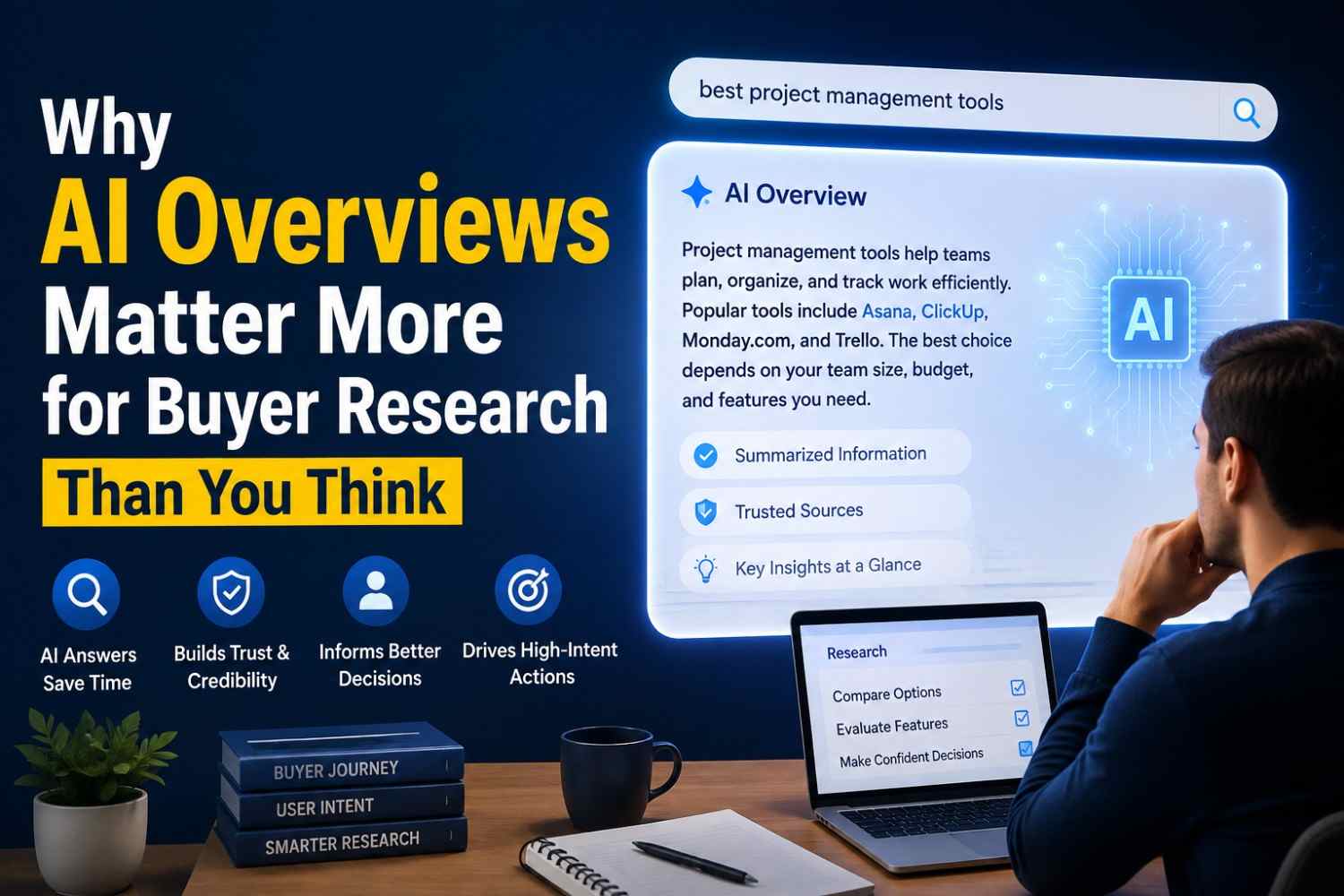
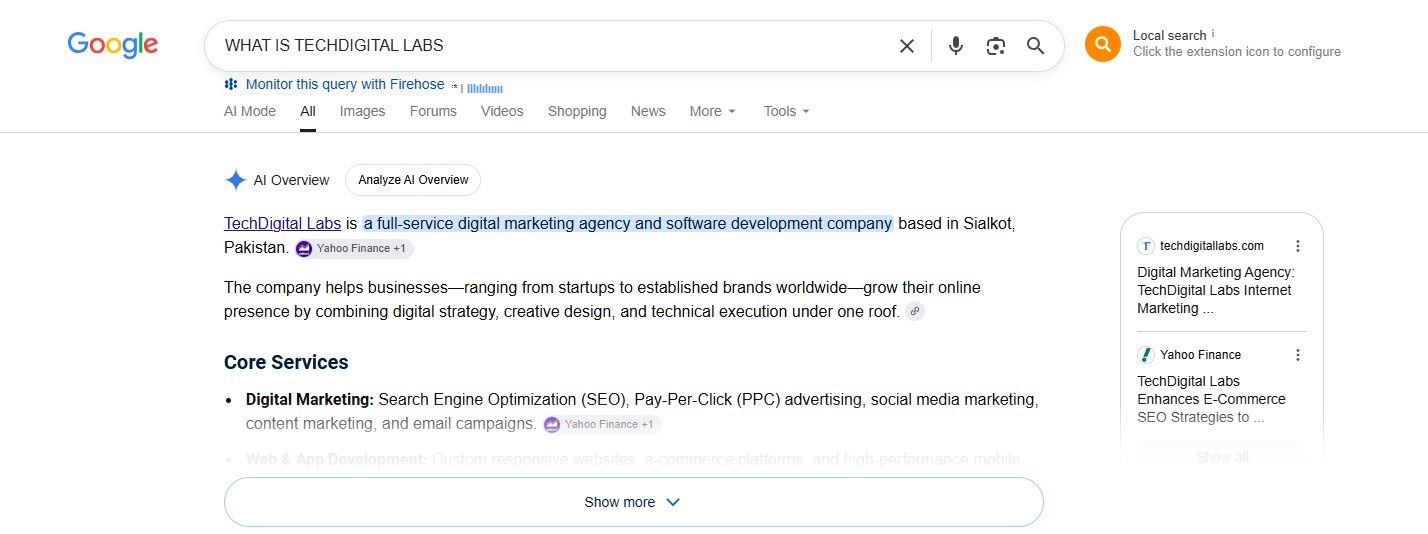
AI Overviews are AI-generated summaries shown directly in Google Search. These AI-generated answers help users learn more quickly about a subject. They combine information from multiple sources and display links users can follow to get more information. Our recent breakdown of AI Overviews for buyer research looks at how buyers actually use these summaries during research.
This changes how the search process begins. Users can see an answer before they even scroll to the normal organic listings. However, the links included in the AI answer still give brands a chance to gain visibility and clicks.
For brands, this means it isn't enough for a page to simply rank well. It also needs to offer informative, practical, and reliable information that can support an AI-generated answer.
What Is Google AI Mode?
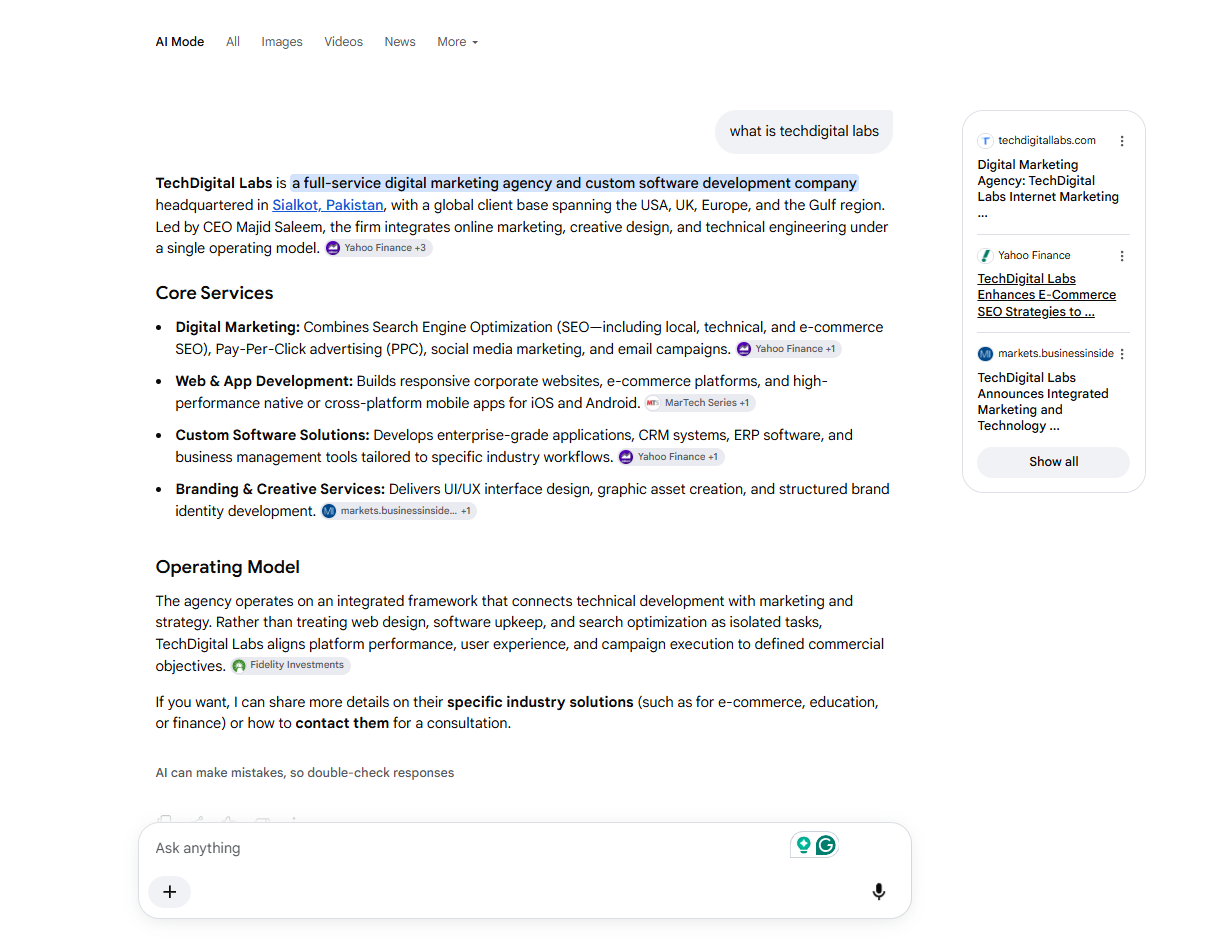
AI Mode is a more conversational form of search that Google offers for answering complicated questions and pursuing additional research. Users can ask a question, follow up, and dig deeper into a topic. Google says AI Mode can break a question into subtopics and find relevant information across the web.
This is what sets AI Mode apart from a mere search summary. It is oriented towards the user who may want to investigate a subject and not to obtain a single answer.
For example, someone shopping for software might ask which option best suits their needs, compare features side by side, and then narrow the search based on their business requirements.
AI Overviews vs. AI Mode: The Main Difference
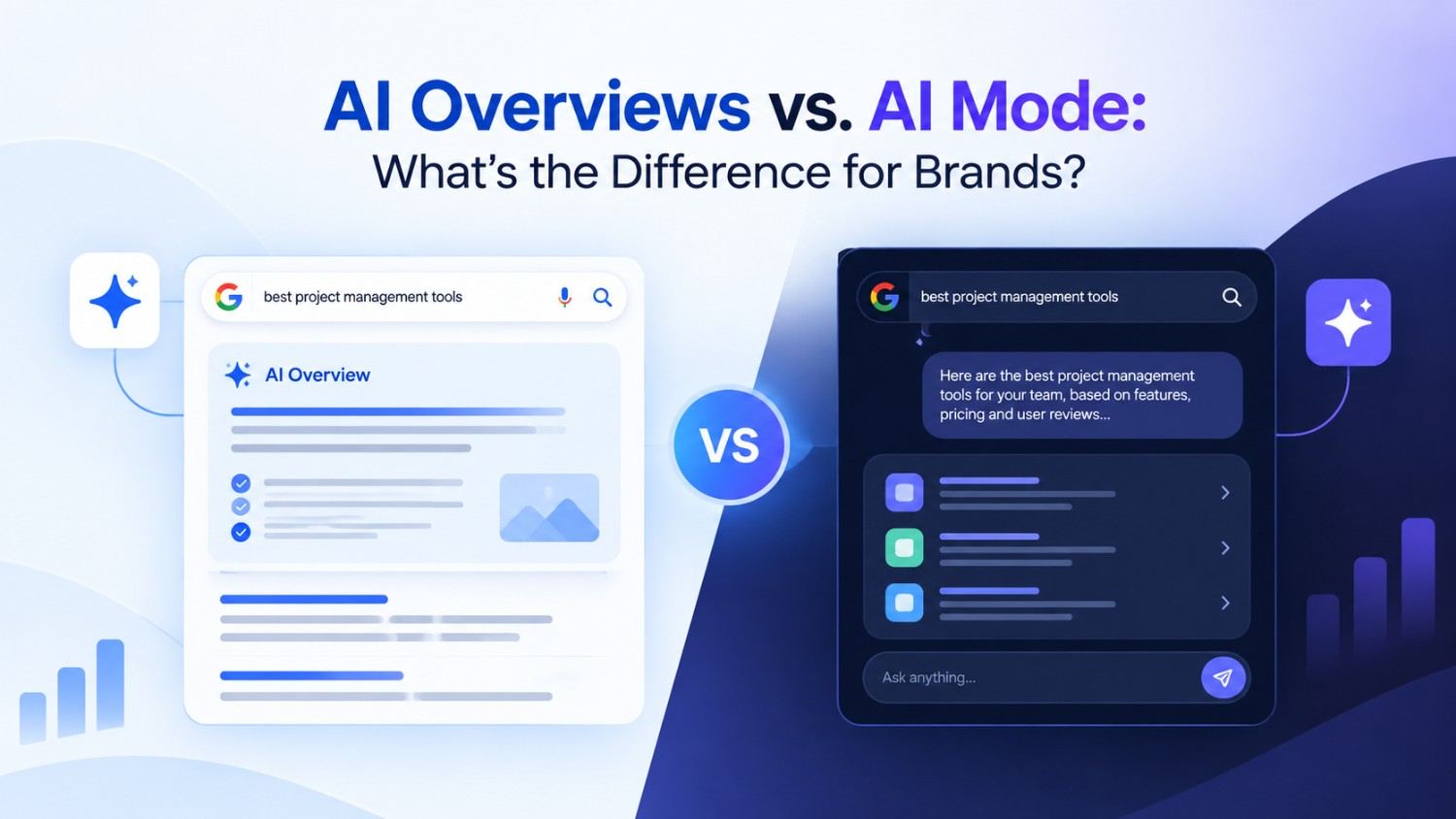
The primary distinction is depth and interaction. AI Overviews are created to provide users with a friendly starting point, whereas AI Mode is created to explore it more in depth and to ask multi-step questions.
| Feature | AI Overviews | AI Mode |
| Main purpose | Quick understanding | Deep research |
| Search style | Summary | Conversation |
| Follow-up questions | More limited | Core feature |
| Complex research | Moderate | Strong |
| Web exploration | Links to sources | Searches through several subtopics |
| Brand opportunity | Visibility and citations | Visibility throughout a longer search journey |
According to Google, AI Mode is an extension of what AI Overviews are capable of, with more advanced reasoning and interaction with search.
Why the Difference Matters for Brands
This difference matters because users can now learn about a brand without starting from a standard list of search results. Before a user ever visits a site, AI can summarize information, compare options, and guide them through a subject.
That creates both a challenge and an opportunity. Simple questions may generate fewer clicks to a brand's site, yet when its content is used as a source in an AI response, the brand still gains visibility.
Google continues to refine how AI Search identifies relevant websites, original content, and credible sources to link to — changes that follow the same direction as Google’s August 2026 spam update.
So it's more effective to focus on being helpful, clear, and credible than to chase a single keyword.
How AI Changes the Customer Search Journey
AI search changes the customer experience by letting users move through multiple questions without starting over. Someone can begin with a general question, then ask for comparisons, examples, costs, risks, or recommendations.
For example, a customer might start by searching for the best CRM for a small business. They can then ask which option is the most automated, compare two providers, and finally check which one fits their budget.
This creates additional touchpoints for the brand throughout the search journey. Every step is a chance to offer helpful information and build trust.
What This Means for SEO
Google's AI search experiences are still built on SEO fundamentals. AI Overviews and AI Mode rely on what Google already knows about web content, so brands should not skip technical SEO, valuable content, internal links, and good site structure.
Google says AI Mode draws on its deep knowledge of web data and uses quality web content to support the accuracy of its answers.
Brand pages should therefore be built around the real questions people are searching for. By clearly defining the topic, giving straightforward answers, and backing them up with facts, expert opinions, and examples, brands make it easier for both people and search systems to understand their content.
Why AEO Matters More
Answer Engine Optimization revolves around simplifying content so it's easy to read, extract, and use as a direct answer. This matters because AI search tends to favor brief information that directly answers a user's question.
Answer Questions Directly
Don't bury the answer in a long introduction — state it upfront. Then explain why it matters, back it up with evidence, and add helpful context.
Structure Content for Clear Answers
For example, a technical SEO page can answer “What is technical SEO?” directly in the introduction, then cover crawling, indexing, site speed, structured data, mobile usability, and other related topics.
Match Conversational Search Intent
Users frequently type full questions rather than short keywords. AEO helps brands organize content around these questions and give direct responses that match what the user actually wants to know.
Support Answers With Context
Clear answers work best when they include useful facts, examples, and supporting details. This approach supports user-centric conversational search.
How GEO Supports Brand Visibility
Generative Engine Optimization focuses on making information about a brand clear and understandable within generative search experiences. This isn't about writing content for an AI system alone — brands need to build strong, well-organized information that AI systems can interpret and users can trust, the kind of groundwork a dedicated generative search optimization agency focuses on every day.
Build Clear Brand Information
This includes clear brand facts, consistent business details, thoughtful content, demonstrated authority, original research, relevant references, and strong topical coverage.
Strengthen Entity Consistency
A unified brand identity helps search systems connect information from different sources. Business details, services, products, locations, and other key facts need to stay current and consistent.
Create Original Information
Content becomes stronger with original research, expert opinion, examples, and useful analysis. These elements also help a brand stand out from pages that simply recycle the same basic information.
Earn Relevant Mentions
SEO practitioners increasingly agree that earning mentions on relevant, trustworthy sites — alongside entity consistency, original information, and expert content — plays a growing role in AI search visibility.
Build Content for Both Search Experiences
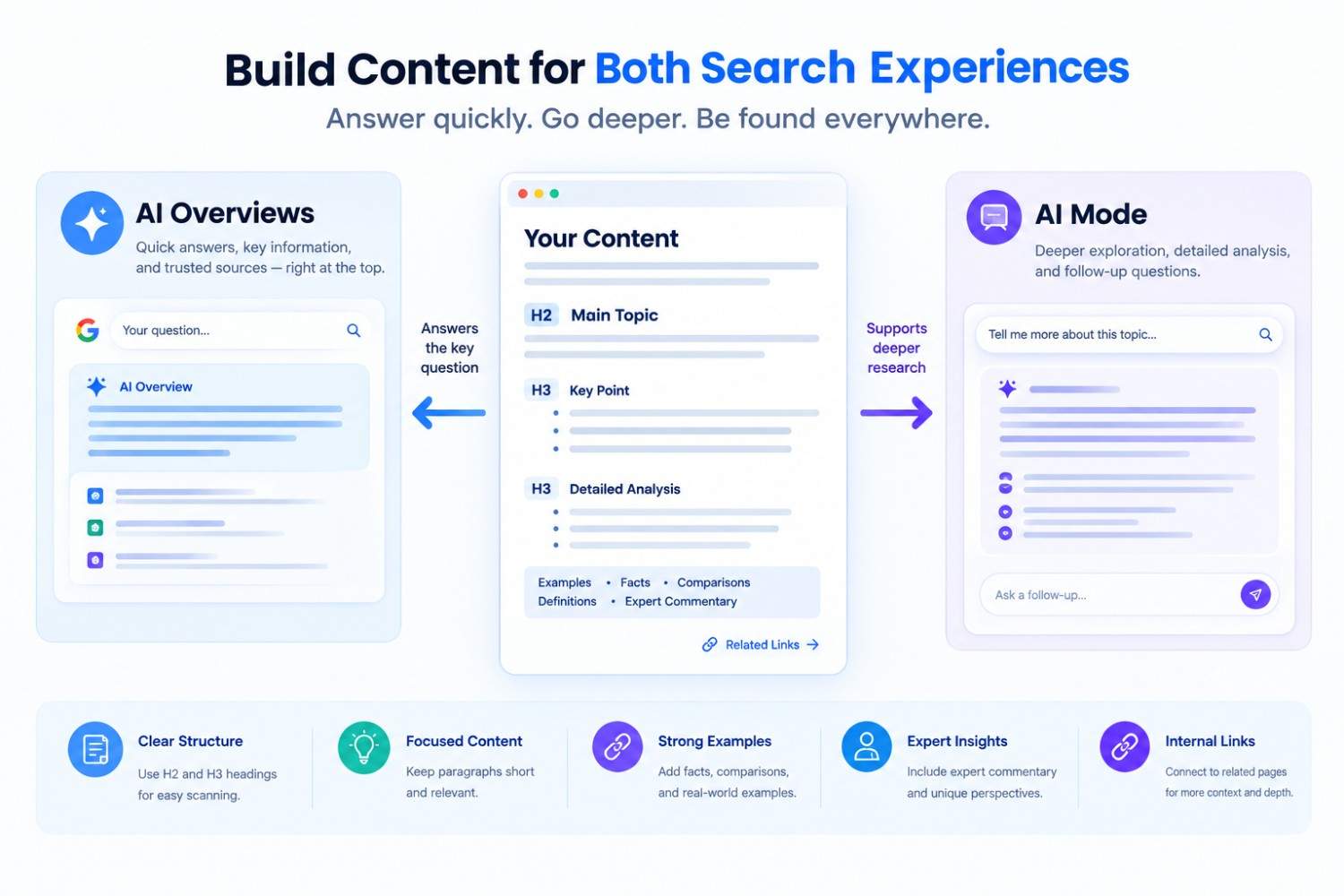
Brands should aim to create content that answers quickly while still supporting deeper research. A well-designed page addresses the key question early, then provides enough detail for readers who want to go further — an approach we cover in more depth in our piece on content agility and discoverability.
Apply clear H2 and H3 headings. Keep paragraphs focused. Include practical examples, facts, comparisons, definitions, and expert commentary. Also include internal links between related pages. This builds topical depth and gives search systems more context about the brand and its area of specialization — the same principle a skilled SEO and AI search team applies across every page it builds.
Strengthen Your Brand Entity
A brand entity refers to the network of information that recognizes and explains a business throughout digital sources. Websites and other sources can also provide information that can be used by search systems to identify what a brand does and its location in a market.
Brands should therefore keep this information accurate and consistent across the board. There should be no contradictions between major sources in terms of business names, services, products, locations, leadership information, and other relevant facts.
Trust can also be supported by strong entity signals when a brand is mentioned on pertinent and trustworthy websites.
Measure Visibility Beyond Clicks
AI search demands that brands should look beyond the old-school metrics of traffic. A page can also have an impact on a customer although the user may not be clicking at that time.
Measure organic impressions, rankings, branded searches, conversions, referral traffic and engagement. Also keep track of your key pages showing up on conversational searches and your brand in the results of the AI-generated results.
Google continues to expand its AI search controls and the tools available for understanding how content performs in AI-powered results, including AI Overviews and AI Mode.
How TechDigital Labs Helps Brands Adapt
As a digital marketing and AI search agency, TechDigital Labs helps brands build search strategies for both traditional and AI-based discovery. Its services include SEO Services, Answer Engine Optimization, Generative Engine Optimization, Technical SEO, On-Page SEO, Off-Page SEO, SEO Content Writing, Website Copywriting, and Digital PR Outreach
The company also offers PPC Advertising, Content Marketing, Social Media Marketing, Brand Identity, Web Development, UI/UX Design, App Development, and Custom Software Development. Together, these services support the full customer journey from discovery to conversion.
The goal isn't simply to publish more content. It's to build a transparent online presence with valuable information, a strong technical foundation, and consistent brand messaging — the kind of groundwork a trusted SEO and AI search partner should help a brand put in place.
Prepare for the Next Stage of Search
Google's AI Overviews and AI Mode are two distinct ways Google is transforming how people discover information. AI Overviews help users get familiar with a subject quickly, while AI Mode supports deeper questions and continued research.
In the case of brands, the reaction must be feasible. Keep SEO strong. Answer real questions. Build topical authority. Show expertise. Cite credible sources of support. Maintain brand information.
Above all, create something that helps people make better decisions. Once your brand becomes a helpful, reliable source, it becomes more likely to stay visible as search gets more conversational. If you’d like help building that kind of visibility, get in touch with our team to start with an AI search visibility review.
Frequently Asked Questions
Are AI Overviews and AI Mode the same thing?
No. AI Overviews provide an AI-generated summary within Google Search, while AI Mode offers a more conversational experience with follow-up questions and deeper research. According to Google, AI Mode extends the capabilities of AI Overviews.
Can brands appear in AI Overviews?
Yes. Google says AI Overviews can include links to web sources. Brands need to maintain good SEO practices and create helpful, trustworthy, people-focused content that directly answers what users are searching for.
Is SEO still important for AI Mode?
Yes. AI Mode draws on Google’s knowledge of web content and searches through relevant sources. Strong technical SEO, valuable content, good site structure, and reliable information remain essential.
Should brands focus on AEO or GEO?
Both can work together. AEO helps simplify answers and make them easy to navigate, while GEO focuses on visibility and comprehension within generative search experiences. Both are built on a foundation of effective SEO and helpful content.
How should brands prepare for AI search in 2026?
Brands will need to focus on technical optimization, publish valuable expert content, reinforce topical coverage, keep brand information consistent, earn relevant mentions, and address the real questions customers are asking. They should also pay attention to AI search visibility, rankings, traffic, and conversions.