Quick Answer: A local SEO checklist can assist small businesses in becoming more visible in Google Search and Google Maps. The main actions are creating a complete Google Business Profile, maintaining business information, earning genuine reviews, enhancing local pages, fixing technical SEO issues, building local links, and creating valuable content that satisfies the needs of customers. Last Reviewed: September 15, 2026
Written by Sana Raza, Local SEO & Content Strategist at TechDigital Labs - specialist in Local SEO, technical SEO, content strategy, Answer Engine Optimization, Generative Engine Optimization, and digital marketing, working with local and global businesses on search visibility strategies.
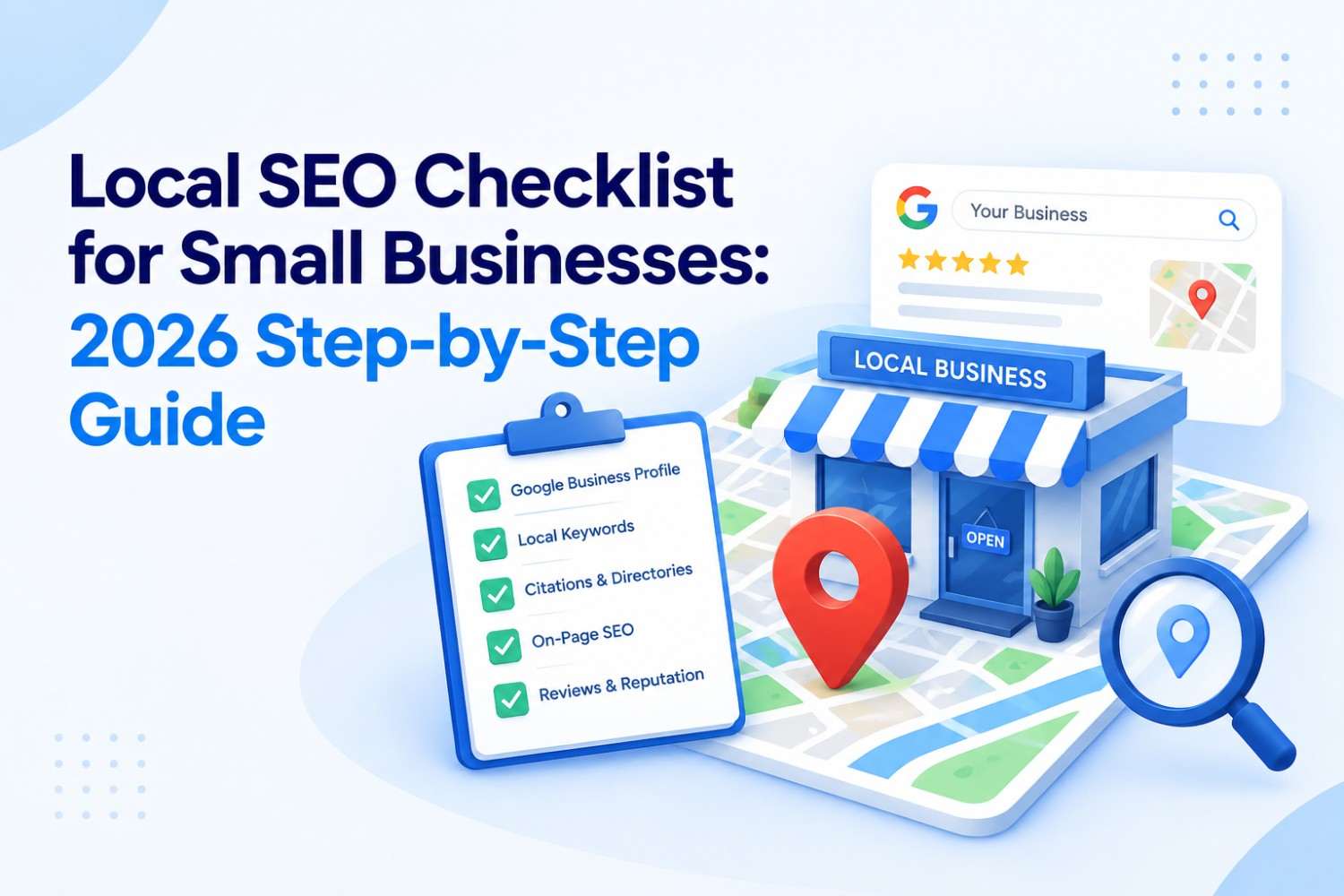
A local SEO checklist refers to a step-by-step list of activities that assists a business in enhancing its visibility in local search. It covers the chief indicators that aid search systems in comprehending what a business does, where it is located, and why it could be of benefit to local customers. Working through this checklist with a digital marketing agency can help you prioritize the signals that matter most for your market.
Local search engine optimization does not only apply to a single profile or web page. Rather, it links your Google Business Profile, webpage, reviews, citations, local content, links, and technical configuration.
According to Google, local results are primarily based on relevance, distance, and prominence. It also suggests maintaining Business Profile information relevant and precise, responding to reviews, and including photos and videos.
Key Takeaways
- A complete and accurate Google Business Profile is the base of local SEO.
- Regular business information assists search systems in knowing your business.
- Trust and local relevance can be reinforced by reviews, local content, citations, and links.
- Businesses should also be clear in their information to enable AI search and conversational queries in 2026.
Why Local SEO Matters for Small Businesses
Local SEO assists companies in being visible to customers living in their vicinity when they are in need of a product or service. This is important since numerous local searches occur once individuals are about to visit, call, book, or purchase.
Research from BrightLocal consistently shows that most consumers turn to online search when looking for a local business, and that they typically check more than one source before making a decision.
Therefore, your business cannot afford to rely on a single platform. This should be a robust local presence that goes through Search, Maps, your site, and review sites, directories, and other helpful sources. Get this right and the payoff is direct: more phone calls, more direction requests, and more customers who choose you before they ever compare a competitor.
The 2026 Local SEO Checklist
1. Complete Your Google Business Profile
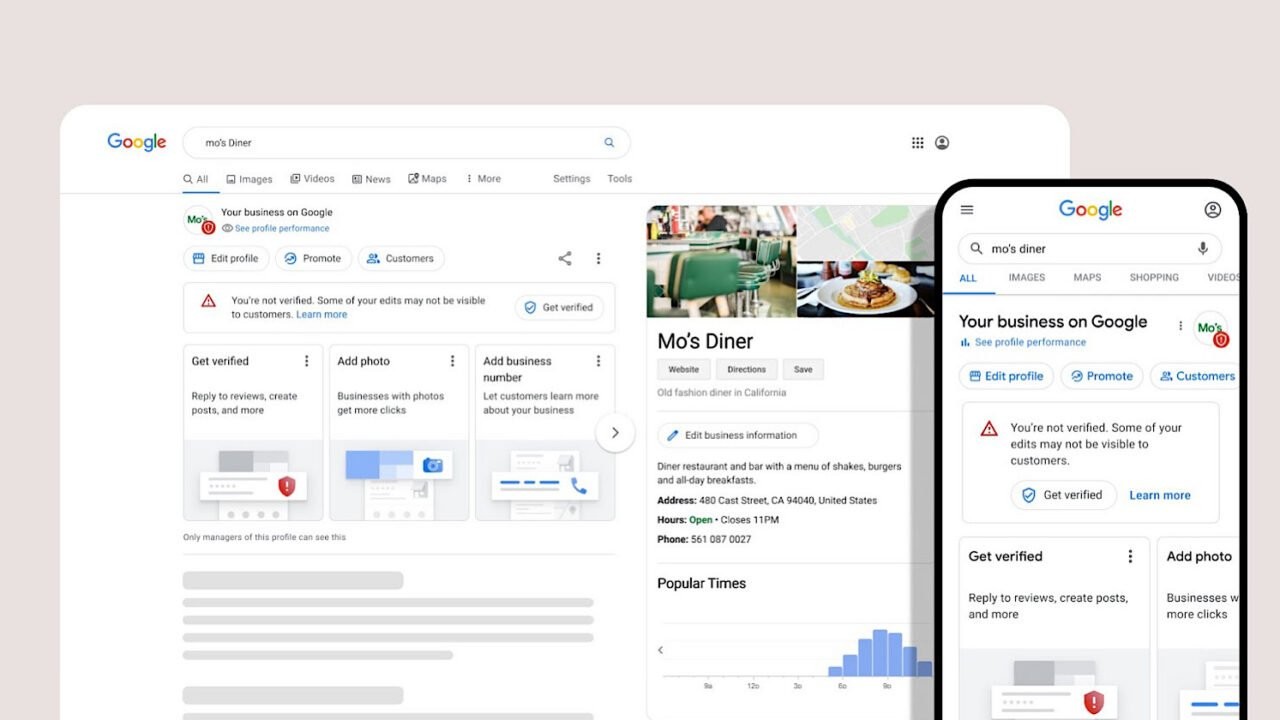
Google Business Profile is the single most important listing for helping a local business get seen in Google Search and Maps. It sits at the core of any Local SEO strategy, and understanding how Google surfaces local businesses across Search and Maps makes every other step on this checklist easier.
Make sure to check every aspect of your profile:
- Claim and authenticate your profile.
- Use your real business name.
- Choose the most appropriate main category.
- Add relevant secondary categories.
- Include your services and products as needed.
- Write a clear, effective business description.
- Include the proper address or service area.
- Establish correct business hours.
- Enter your phone number.
- Enter your URL.
- Post helpful photos and videos.
- Include pertinent business characteristics.
- Check for and merge duplicate listings.
According to Google, the more business information is complete and accurate, the greater the chances of a Business Profile appearing in a relevant local search.
2. Keep Your Business Data Consistent
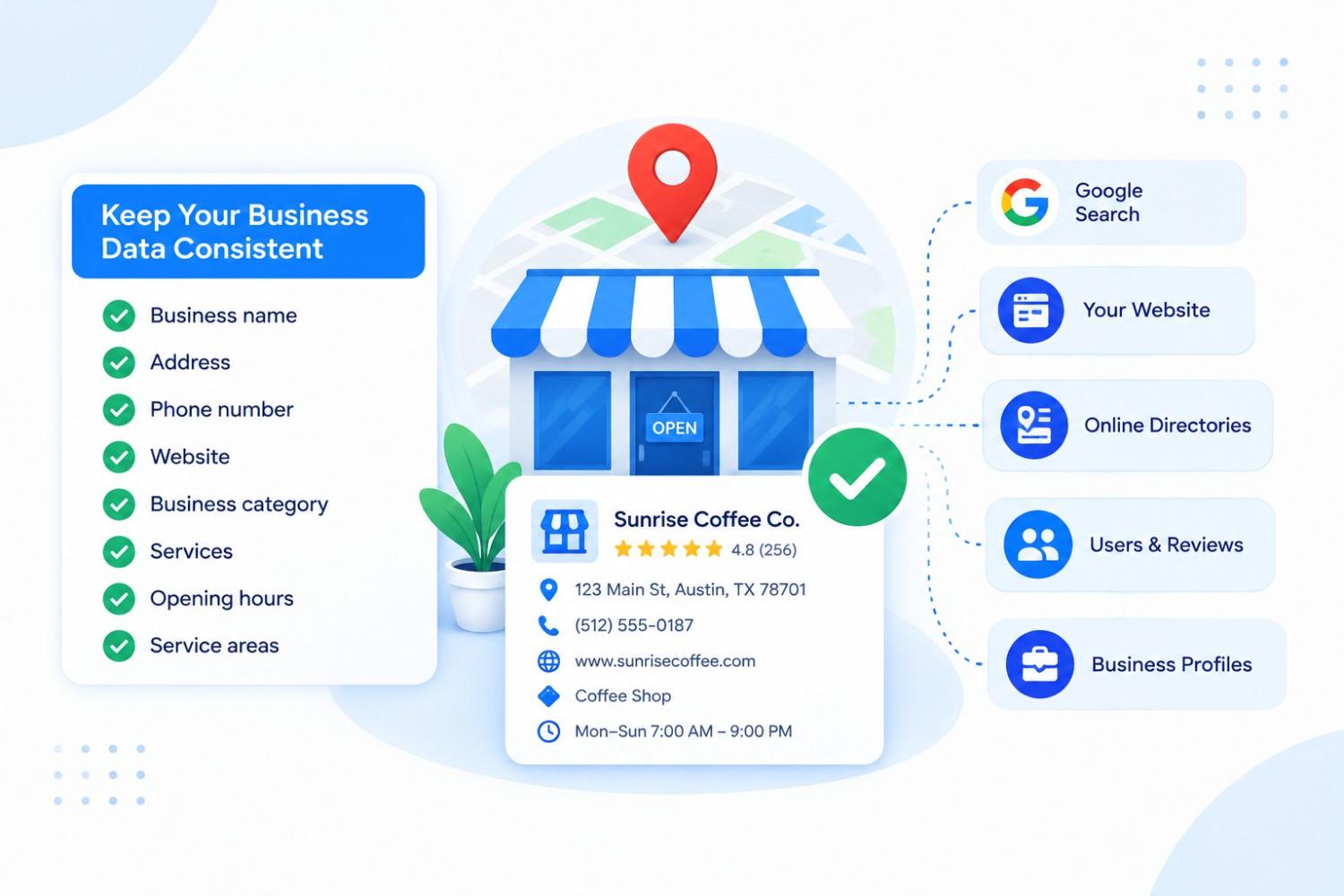
Business data consistency means keeping your core business facts identical everywhere they appear, on your own site and across other web sources.
Check your:
- Business name
- Address
- Phone number
- Website
- Business category
- Services
- Opening hours
- Service areas
Google obtains business information from a number of sources such as official websites, third-party information, users, and Business Profiles.
Review significant listings and correct old or conflicting information. This provides a more informative footprint to both the customers and search systems.
3. Improve Your Website for Local Search
A local business website ought to be very straightforward about what the company provides, where it is located, and how the customer can take the next step. Many small businesses handle this on their own, but a full-service SEO agency can audit these elements faster and catch gaps a business owner might miss.
Check these areas:
- Design an attractive homepage.
- Include special service pages.
- Design handy location pages as required.
- Add local real information.
- Include contact information.
- Write descriptive page titles.
- Compose useful meta descriptions.
- Improve internal links.
- Include effective calls to action.
- Make the site mobile-friendly.
- Improve page speed.
- Check broken links.
- Make navigation simple.
Do not make ten pages with weak content just because you want to reach cities. Each area page ought to be of real value and helpful information.
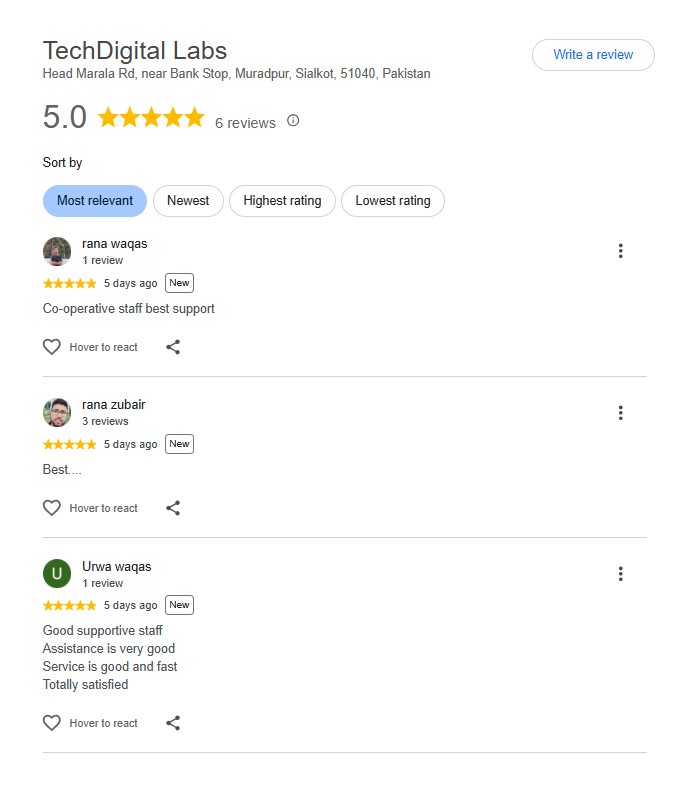
4. Build a Strong Review Strategy
Reviews offer personal customer feedback which can influence trust and local reputation.
Ask genuine customers for honest reviews after a completed service or purchase. Then act upon reviews in a supportive and professional manner.
According to Google, effective replies and positive feedback can make a business stand out. It also incorporates review information from other local review sites into some Business Profiles.
Checklist in use:
- Request actual customers to review.
- Ensure the review process is made easy.
- Respond to positive reviews.
- Act cautiously on negative reviews.
- Avoid fake reviews.
- Do not buy reviews.
- Monitor review trends.
- Find typical customer feedback.
Trust, not review volume itself, should be your aim.
5. Build Relevant Local Citations
A local citation is any mention of your business data on an online directory, platform, or relevant site. Getting these consistent across the web is often outsourced to a local citation building service once the list of directories grows large.
Begin with reliable and helpful references. They can be large directories, map systems, industry directories, local business associations, and other community-based sites, depending on your market.
Check each listing for:
- Correct business name
- Correct address
- Correct phone number
- Correct website
- Correct category
- Updated hours
- Accurate description
Local SEO practitioners generally agree that NAP consistency, core platforms, niche directories, reviews, local content, and local backlinks are the areas worth prioritizing.
It is better to have one good listing than to make hundreds of ineffective ones.
6. Create Useful Local Content
Local content refers to the content that addresses questions and issues that are of interest to the customers within a given locality.
For example, a local HVAC company could create content about:
- AC maintenance costs
- The selection of an appropriate system.
- Common heating problems
- Seasonal maintenance
- Local service areas
- Questions to pose prior to hiring a technician.
Similarly, a dentist would respond to inquiries regarding treatments, prices, care, types of appointments, as well as local services.
This will develop topical depth and provide customers with useful answers. A SEO content writing workflow built around real customer questions keeps this content useful instead of generic.
7. Strengthen Local Links and Authority
Local link building connects a business with other relevant websites, organizations, and communities within its market. Businesses that lack the time or relationships for outreach often turn to a local link building service to build these connections systematically.
Seek authentic opportunities such as:
- Local news websites
- Business associations
- Industry publications
- Community organizations
- Local events
- Sponsorships
- Business partnerships
- Relevant local resources
Do not purchase a high number of irrelevant links. It can be of greater value to have a few relevant and trusted references than a huge list of low-quality links.
8. Fix Technical SEO Issues
Technical SEO makes it easier for search systems to crawl, understand, and make use of your site. A dedicated technical SEO service can work through this list far faster than a manual review.
In your checklist, there should be:
- Mobile usability
- Page speed
- HTTPS
- Indexability
- XML sitemap
- Robots.txt
- Canonical tags
- Broken links
- Redirects
- Structured data
- Duplicate pages
- Core page templates
And verify that important service and location pages can be crawled and indexed.
Technical SEO is not local relevance. Instead, it will complement the other elements of your local strategy.
9. Prepare for AEO and GEO
Answer Engine Optimization and Generative Engine Optimization help a business present information in a way that clear, answer-based, and generative search experiences can use. Services like Answer Engine Optimization and Generative Engine Optimization build directly on the local SEO foundation already covered in this checklist.
In 2026, the customer might not need to type short words; they can ask complete questions to the computer. They can additionally compare local businesses and receive recommendations with the help of AI tools.
According to BrightLocal, 45 percent of consumers used AI tools to get local business recommendations in 2026, up from just 6 percent the year before. For more on what this shift means for brands, see this breakdown of AI Overviews vs. AI Mode.
To prepare:
- Address prevalent customer queries.
- Define services clearly.
- Be consistent with business facts.
- Show real expertise.
- Add useful examples.
- Maintain strong local signals.
- Use credible sources to support claims.
- Maintain significant business data up-to-date.
It is not aimed at writing to AI. Rather, develop information that is comprehensible and credible.
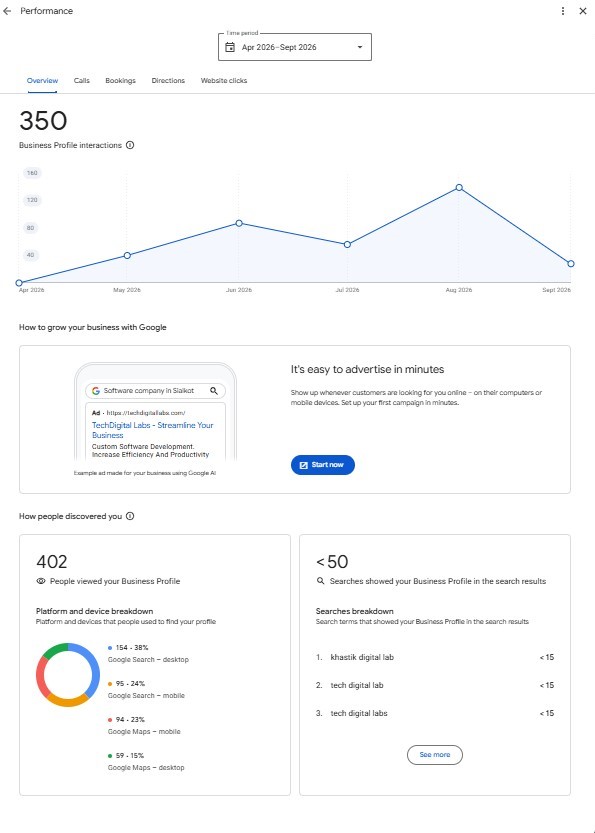
10. Track Local SEO Performance
Local SEO tracking shows whether you are making progress in visibility and business outcomes. Running a periodic SEO audit keeps these metrics honest and catches drops before they become a trend.
Monitor valuable measures like:
- Local rankings
- Organic impressions
- Organic clicks
- Google Business Profile actions
- Calls
- Website visits
- Direction requests
- Review growth
- Leads
- Bookings
- Branded searches
- Local landing page traffic.
Do not consider a single word as the measure of your campaign. The local results may be different depending on the location, search purpose, device, and even competition.
How TechDigital Labs Can Help
As a SEO services provider, TechDigital Labs offers Local SEO services and wider SEO support aimed at building local search visibility. Its services include Google Business Profile optimization, technical, on-page, off-page, local content, citations, as well as digital authority.
Other services offered by the company include Answer Engine Optimization, Generative Engine Optimization, SEO Content Writing, Website Copywriting, Digital PR outreach, and link-building services.
These services are not independent but can collaborate with each other. Local discovery can be enhanced using local SEO, customer questions can be answered using content, technical SEO can be used to maintain the health of the website, and customer authority can be built using digital PR. Ready to see where your business currently stands? Contact our team for a free local SEO review and a clear plan of next steps.
Free Local SEO Checklist: Your Quick Audit
This fast audit transforms the entire local SEO checklist into a mere action list.
☐ Set up and authenticate your Google Business Profile.
☐ Choose the appropriate main category.
☐ Include proper services and business information.
☐ Check business hours.
☐ Add quality photos and videos.
☐ Maintain the same name, address, and phone numbers.
☐ Design or enhance service pages.
☐ Add location pages as necessary.
☐ Test mobile usability and speed.
☐ Repair broken links and indexing problems.
☐ Build relevant citations
☐ Get authentic customer feedback.
☐ Respond to reviews
☐ Develop useful local content.
☐ Establish appropriate local connections.
☐ Include definite customer FAQs.
☐ Check your AEO and GEO preparedness.
☐ Monitor calls, leads, rankings, and GBP activities.
☐ Check monthly progress of your local SEO.
Final Thoughts
The local SEO checklist provides small businesses with an effective approach to enhance local presence without omitting important tasks. Start with the basics. Get your Google Business Profile right, maintain business data, optimize your website, and gain actual customer trust.
Then, proceed to content, citations, local links, technical search, and AI search preparedness. Above all, emphasize productive work and not shortcuts.
Local search has been disseminated to more channels. In a single purchasing process, customers can utilize Google, Maps, review websites, social networks, websites, and artificial intelligence. A full local presence can assist your business to remain present throughout that trip. If building that presence on your own feels like too much to manage alongside running the business, a local search visibility partner can take this checklist and turn it into ongoing, measurable work.
Frequently Asked Questions
What is the most important part of a local SEO checklist?
One of the most crucial starting points is Google Business Profile. Ensure that it is checked, complete, correct, and consistent with your website and other business details. Google says local ranking is mainly based on relevance, distance, and prominence.
How long does local SEO take to work?
There is no definite timeline for local SEO. Market, competition, website, history of the business, reviews, content, authority, and work done all determine the results. Monitor the progress over time instead of a certain outcome within a predetermined time frame.
Do small businesses need local SEO?
Yes, local SEO may be applicable to businesses with a specific area of service. It will assist customers in locating services, location, contact details, reviews, and other important information in case they are searching within the locality.
Are citations still important for local SEO?
Local visibility and business information can be supported in relevant and accurate citations. Nevertheless, companies are encouraged to concentrate on credible and pertinent resources, rather than generating masses of poor-quality listings. Regular business news is also a major component of a good local presence.
Does local SEO help with AI search in 2026?
Local SEO can support the information foundation that AI-powered search experiences use to understand businesses. A more powerful digital presence can be achieved through clear business information, valuable content, effective reviews, relevant mentions, and a properly organized site. Read more on how content agility and discoverability factor into AI search readiness.