Written by Memoona Zafar Butt, SEO & Content Strategist at TechDigital Labs. Memoona Zafar Butt specialises in AI search optimisation and content strategy for B2B and SaaS brands.
Quick Answer: Query fan-out is what happens when AI search systems break one query into a cluster of related searches to understand what a person is really trying to decide. Instead of ranking for a single keyword, AI systems now weigh cost, features, comparisons, and trust signals before generating an answer — which means content built around one keyword alone will keep losing visibility to content built around the full question. This guide breaks down how query fan-out works and how to build a content strategy that AI search actually rewards. Last Reviewed: September 11, 2026
Search is changing. When someone types a single question into Google, an AI system often needs far more information than that one line of text to build a complete answer. Google confirms that AI Overviews and AI Mode use a “query fan-out” technique — issuing multiple related searches across subtopics and data sources before generating a response.
For content teams, this changes what “ranking” actually means. A page can target its keyword perfectly and still fail the real question a reader came with. That’s why content planning has to move past the primary keyword and address the wider concept a reader is trying to understand — the same approach our AI search and SEO optimisation agency applies when auditing client content today.
Key Takeaways
- Query fan-out expands one query into a cluster of related searches.
- It reveals the deeper intent behind what a person is actually trying to decide.
- Content should cover related needs the reader has — without creating thin, unnecessary pages.
- Strong technical SEO and genuinely useful, trustworthy content still decide who wins in AI search.
What Is Query Fan-Out?
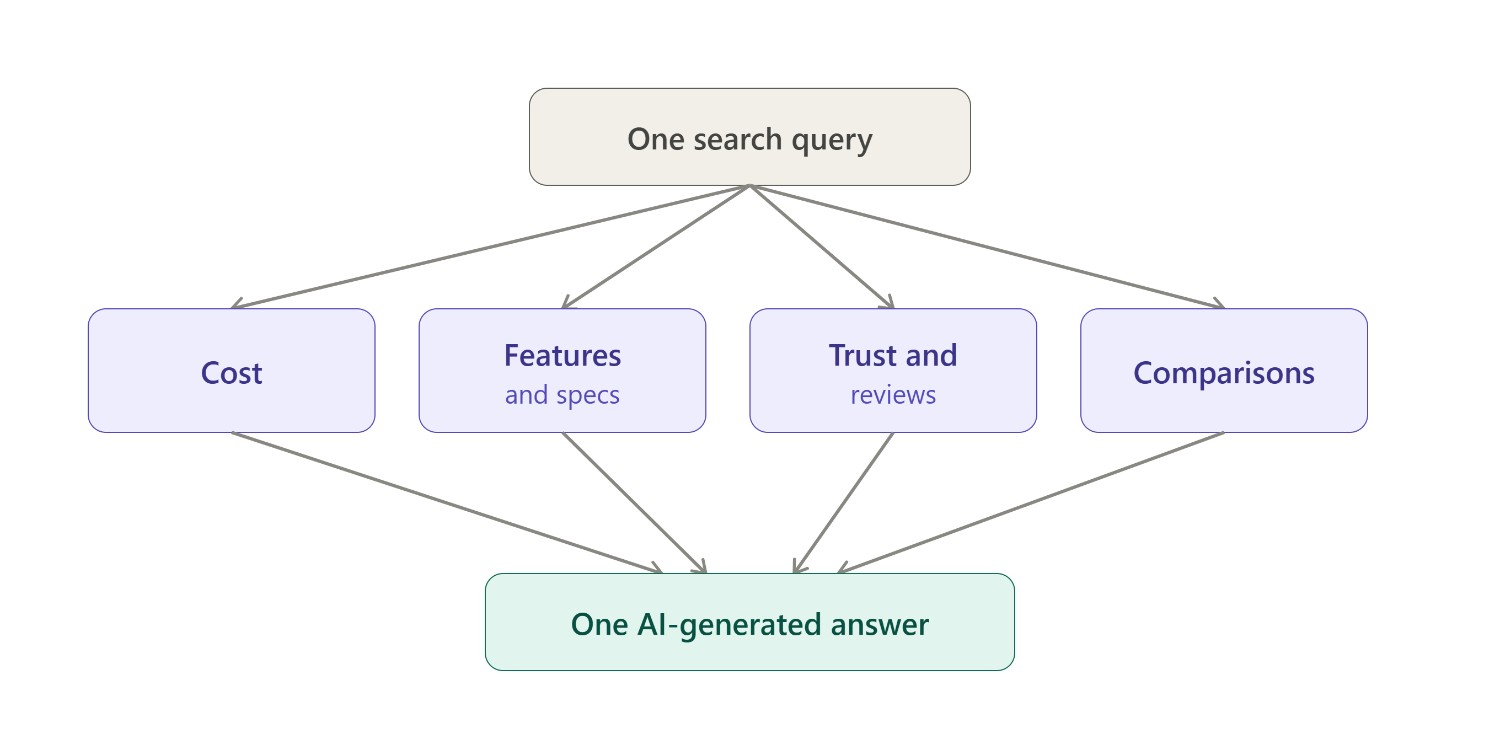
Query fan-out is the spread of a single query into multiple related queries that explore various aspects of the user’s need.
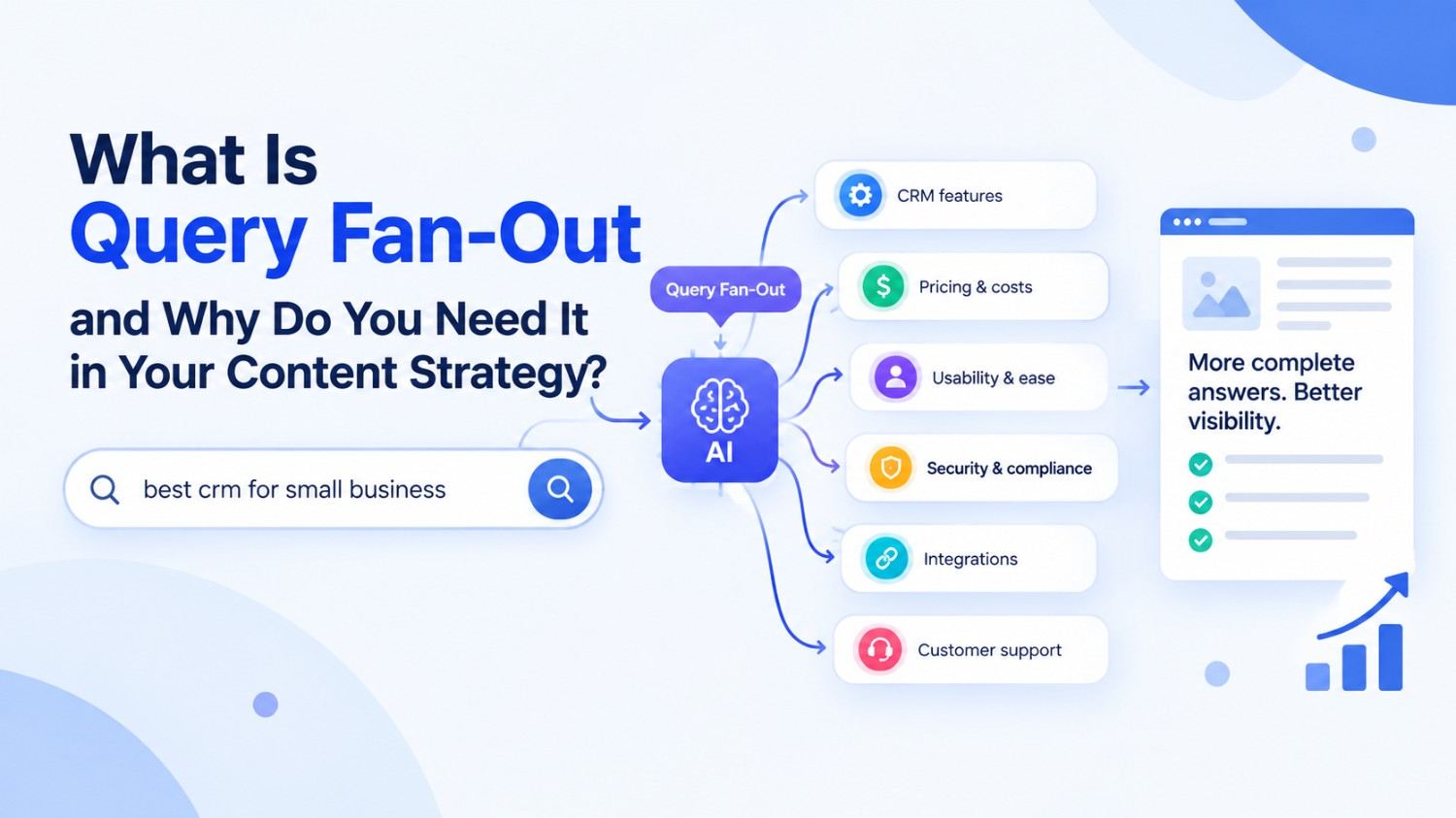
For example, a person may ask, "What is the best CRM for a small business?" An AI system might pull in data on CRM functions, costs, usability, security, integration capabilities, and customer support to answer this fully.
These are not just synonyms of the keyword. They are separate aspects of the same decision.
A Simple Example
Suppose a user types the query, "When is the best time to visit Japan?"
The answer could depend on weather, seasonal events, crowd levels, or cost. So the scope of the search expands far beyond the initial question.
The concept behind query fan-out is simple, but its impact on content planning is significant.
Why Query Fan-Out Matters for Content Strategy
Query fan-out matters because AI search can “traverse” multiple aspects of a query before generating one answer.
Your content should address the central question clearly, along with the related issues that matter to the reader.
For instance, a page for an SEO agency needs to describe what it does, how it does it, its experience, pricing, reporting, and its understanding of the industry — but that doesn’t mean stacking every question onto one page.
Instead, organise the questions into clusters, then decide which points belong on the main page and which are better developed as supporting content. This is the same logic our digital marketing and content strategy team applies to client pages — backed by an answer engine optimisation strategy that structures a site so AI systems can find a complete answer, not a fragment of one.
This gives broader coverage without producing unnecessary pages.
Query Fan-Out vs. Keyword Research
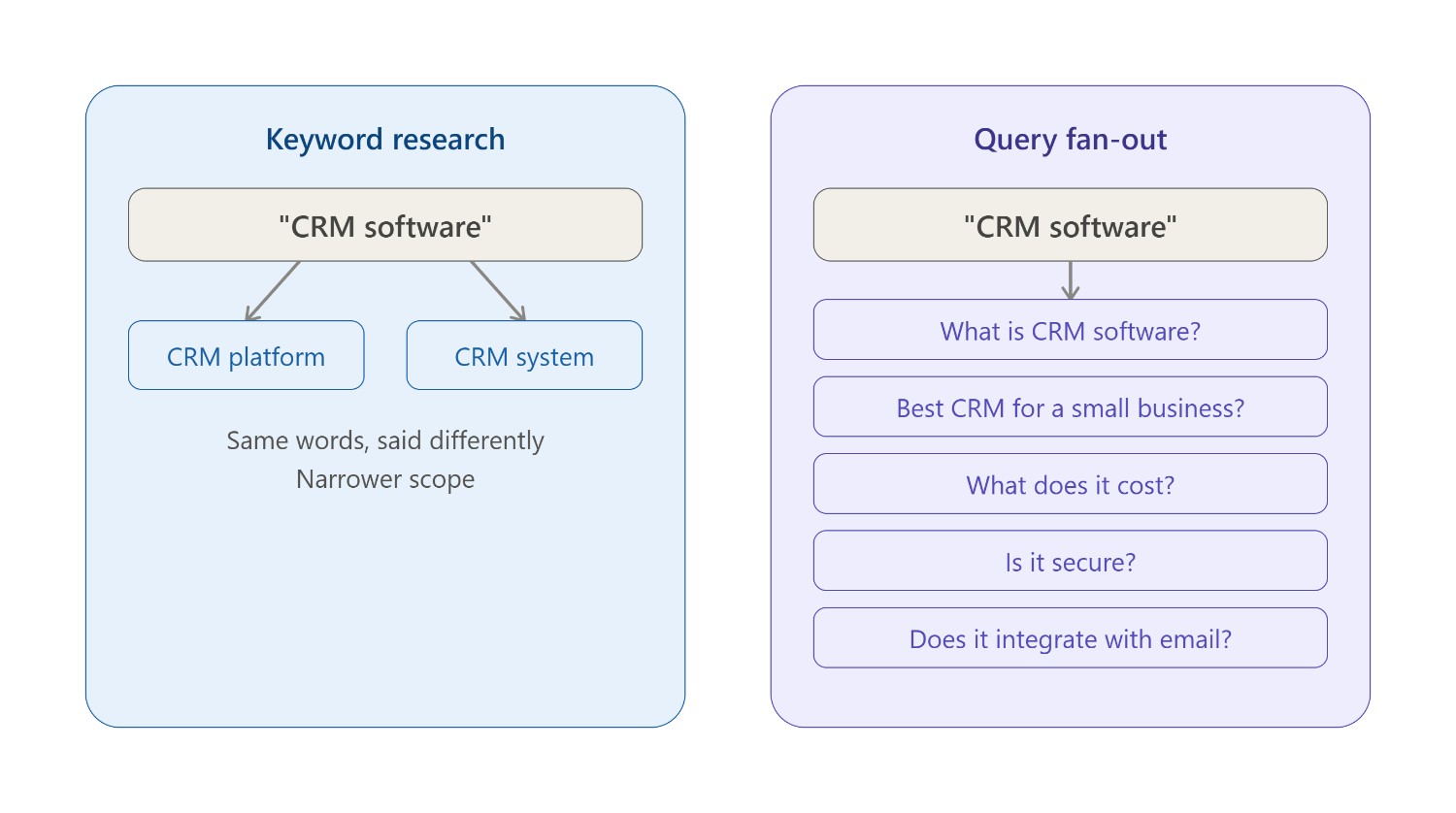
Keyword research identifies search terms; query fan-out identifies everything related to what the person is actually trying to find out.
For instance, keyword research on the phrase "CRM software" might surface terms like "CRM platform" or "CRM system."
A fan-out approach asks deeper questions instead:
What is CRM software? What is the best CRM for a small business? What does it cost? Is it secure? Can it integrate with email?
Keyword research enlarges the words. Query fan-out broadens the intent. Both matter, but intent should drive the final content plan.
How to Build a Query Fan-Out Content Strategy
A query fan-out strategy connects the primary question to the related questions that help a reader understand a topic or make a decision.
Start by defining the question the page needs to answer. Then map out what a reader might ask before and after it, using search results, customer questions, forums, competitor pages, sales calls, and industry research.
Next, categorise the questions by purpose — informational, comparison-driven, commercial, trust-building, or action-oriented.
Finally, decide where each question belongs. Group closely related questions together, and use internal links to connect deeper subtopics to their own dedicated pages.
Google also cautions against producing content purely to capture different phrasings of a search query — a practice covered under its Google's recent spam policy update. Its guidance instead points toward helpful, people-first content.
The Query Fan-Out Gap Test
The Query Fan-Out Gap Test helps identify significant questions your content currently fails to answer well. Ask four questions:
- What is the main problem?
- What would the reader ask next?
- What could stop the reader from making a decision?
- What facts or proof would build trust?
When one of these questions doesn’t have a clear answer on the page, you’ve likely found a content gap. The advantage of this test is that it considers the entire reader journey, not just one keyword.
From Query Fan-Out to Topic Clusters
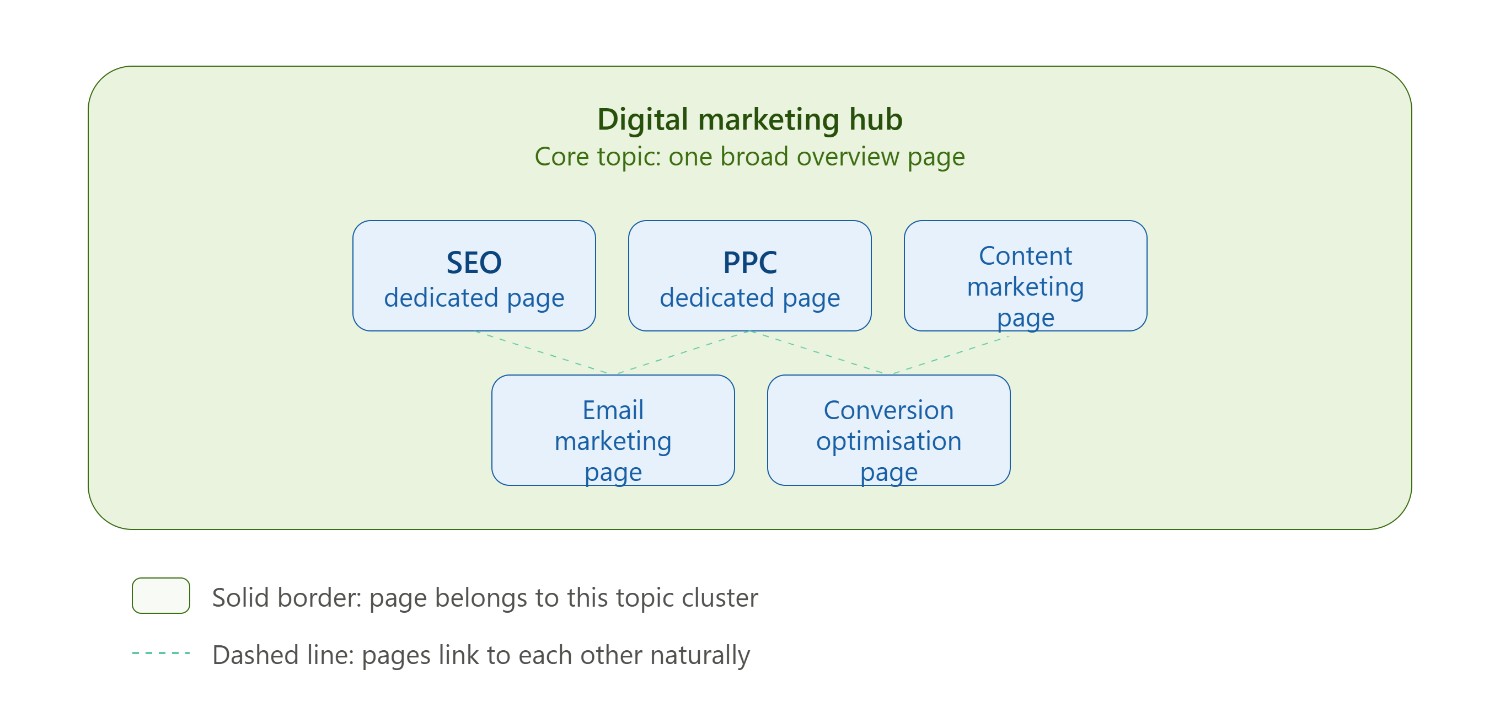
A topic cluster is a group of focused pages that meet the related needs around one broad topic. The structure looks like this:
Core topic → related questions → supporting pages → internal links
The related questions connect back to the core topic, which is then supported by dedicated pages linked to each other across the site.
A digital marketing hub, for example, might connect SEO, PPC, content marketing strategy, email marketing, and conversion optimisation — each with its own page, all building content that stays discoverable across both traditional and AI search.
It’s not about creating dozens of thin pages. It’s about building a handful of genuinely helpful pages, each with a clear purpose.
How to Prepare Content for AI Search
AI-ready content provides clarity, context, and trustworthy information in a format that’s easy to follow.
Introduce larger sections with a straightforward answer. Define key terms. Use relevant entities. Cite credible sources to back up claims. Add internal links where they genuinely help. And make sure Google can crawl and index the page — which is where a technical SEO audit usually surfaces the gaps.
Google reports there are no special technical requirements or unique schema needed for AI Overviews or AI Mode. The basic rules of search engine optimisation still apply.
So query fan-out isn’t a shortcut to AI visibility. It’s one strategy for meeting a complex search need that’s distributed across several related topics — which is exactly what generative engine optimisation services are built to address.
What the Data Says About AI Search
Recent browsing data shows AI-generated summaries already reach a large share of everyday searches.
In a Pew Research Center study of 900 U.S. adults’ browsing activity in March 2025, 58% had conducted at least one Google search that produced an AI-generated summary.
That figure alone doesn’t guarantee visibility for any single query, but it underlines why understanding how buyers use AI Overviews for research matters for businesses that depend on organic traffic — and why more brands are turning to SEO and AI search specialists to close that gap.
How TechDigital Labs Can Help
TechDigital Labs helps companies bring SEO, digital marketing, content, and web technology together into one growth plan. Query fan-out research often reveals exactly where your content is falling short — and that gap tends to widen every month it goes unaddressed, as competitors close it with pages built around the full question instead of just the keyword.
We offer SEO content writing services, technical SEO, and web development, so fan-out research doesn’t just sit in a spreadsheet — it turns into pages that are actually built and published. As a full-service SEO and digital marketing agency, the goal isn’t to chase every possible question. It’s to build an online presence that genuinely answers what your customers are asking.
Ready to see where your content has gaps? Talk to our SEO strategists and we’ll walk you through a fan-out gap test for your top pages.
Frequently Asked Questions
Here are some of the questions we hear most often from clients and content teams about query fan-out.
What Is Query Fan-Out in SEO?
Query fan-out is the expansion of a user’s primary query into a set of associated queries that broaden the topic the AI system needs to cover.
Is Query Fan-Out the Same as Keyword Research?
No. Keyword research is about search terms; query fan-out is about the other questions and information needs behind them.
How Can I Find Query Fan-Out Questions?
Search results, customer questions, forums, competitor content, and AI search tools can all help uncover the related questions behind your central topic.
Should Every Fan-Out Query Have Its Own Page?
No. Closely related questions are often best answered together on one strong page. Create a separate page only when there’s genuinely more to say.
Does Query Fan-Out Guarantee AI Visibility?
No. Google doesn’t guarantee inclusion in AI Overviews or AI Mode. Technical SEO and valuable, trustworthy content still decide the outcome.
Conclusion
Query fan-out shows why a single search query can represent many information needs at once. Instead of optimising for one keyword, look for the questions, concerns, entities, and decisions connected to it.
Once you know which answers belong on the main page and which need supporting content, you can build pages that perform better in both traditional search and AI-driven discovery.
TechDigital Labs works across SEO, digital marketing, web development, and custom software — as an SEO and AI search growth agency, the objective stays simple: don’t chase every query. Answer the right ones properly.